Bagarius bagarius
Overview
Bagarius bagarius (Goonch Catfish)
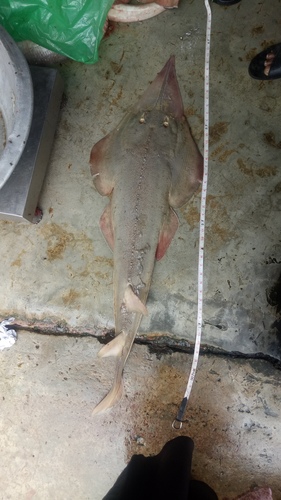
The goonch catfish is a large freshwater predator that can reach lengths exceeding 2 meters and weights of 90+ kilograms. This bottom-dwelling species features a broad, flattened head with prominent barbels and a powerful jaw equipped with sharp teeth. As an apex predator, it feeds primarily on fish, crustaceans, and occasionally small mammals, playing a crucial role in maintaining aquatic ecosystem balance in major river systems.
The species inhabits large rivers and their tributaries across South and Southeast Asia, including the Ganges, Brahmaputra, Mekong, and Chao Phraya river systems. It prefers deep pools with rocky substrates and strong currents, typically found in areas with high dissolved oxygen levels.
Population decline stems from multiple interconnected threats. Dam construction fragments river systems and alters natural flow patterns essential for spawning migrations. Water extraction for agriculture and urban development reduces habitat quality and connectivity.
Invasive species compete for resources and may introduce diseases. Urban expansion along riverbanks increases pollution and habitat degradation, while overfishing targets this slow-growing species faster than populations can recover.
Conservation efforts include habitat protection initiatives in several range countries and fishing regulations in some regions. Research programs are documenting population status and migration patterns to inform management strategies. Some dam projects now incorporate fish passage systems, though implementation remains inconsistent across the species' range.
The outlook remains concerning as threats continue to intensify across most of the species' distribution. Without coordinated transboundary conservation action addressing dam impacts and overfishing, further population decline appears likely.
The Bagarius bagarius, a large freshwater fish, faces three main ongoing threats to its survival. Dams and water management projects alter river flows and block the fish's movement between feeding and breeding areas, while invasive species and diseases introduced from other regions compete with or harm native populations. Additionally, the expansion of cities and residential developments along waterways destroys the fish's natural habitat and degrades water quality. These threats appear to be continuing at current levels rather than getting better or worse.
Habitat
Other threatened species in SISORIDAE
Threatened in Bangladesh



Frequently asked questions
Why is Bagarius bagarius classified as Vulnerable?
Where does Bagarius bagarius live?
What are the main threats to Bagarius bagarius?
Get weekly conservation intelligence
One short digest a week of the most striking species and country data we ship, plus breaking conservation news paired with our database where it matters.
Free, no spam. One-click unsubscribe in every email.