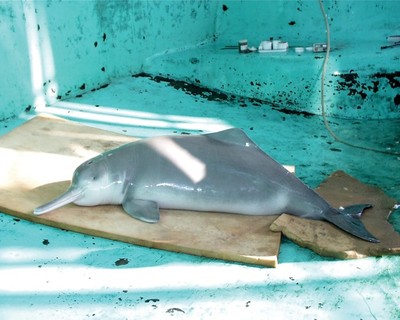
Lipotes vexillifer
Photo: Wikimedia Commons (CC) via https://en.wikipedia.org/wiki/Baiji
Overview
The baiji is a possibly extinct species of river dolphin native to the Yangtze river system in China. It is thought to possibly be the first dolphin species driven to extinction due to the impact of humans. This dolphin is listed as "critically endangered: possibly extinct" by the IUCN, has not been definitively seen in over 20 years, and several surveys of the Yangtze have failed to find it.
The species is also called the Chinese river dolphin, Yangtze river dolphin, Yangtze dolphin, and whitefin dolphin. The genus name Lipotes means "left behind" and the species epithet vexillifer means "flag bearer". It is nicknamed the "Goddess of the Yangtze" and was regarded as the goddess of protection by local fishermen and boatmen.
It is not to be confused with the Chinese white dolphin or the finless porpoise (Neophocaena). This is the only species in the genus Lipotes.
The Yangtze River dolphin faces catastrophic decline from intensive shipping traffic that causes fatal collisions and acoustic interference with echolocation. Massive dam construction, particularly the Three Gorges Dam, has fragmented habitat and altered water flow patterns essential for feeding. Industrial pollution and overfishing have severely depleted prey fish populations, while sand dredging operations destroy critical shallow-water feeding areas.
Habitat
Endemic to the Yangtze River system in China, inhabiting the main river channel and connecting lakes, particularly shallow areas with muddy bottoms where small fish congregate. Historically ranged throughout the middle and lower Yangtze River basin, with populations concentrated in areas with slower currents and abundant prey fish.
Conservation measures underway
Threatened in China
Frequently asked questions
Why is Lipotes vexillifer classified as Critically Endangered?
Where does Lipotes vexillifer live?
What are the main threats to Lipotes vexillifer?
Get weekly conservation intelligence
One short digest a week of the most striking species and country data we ship, plus breaking conservation news paired with our database where it matters.
Free, no spam. One-click unsubscribe in every email.