Whitetip Reef Shark
Triaenodon obesus
Overview
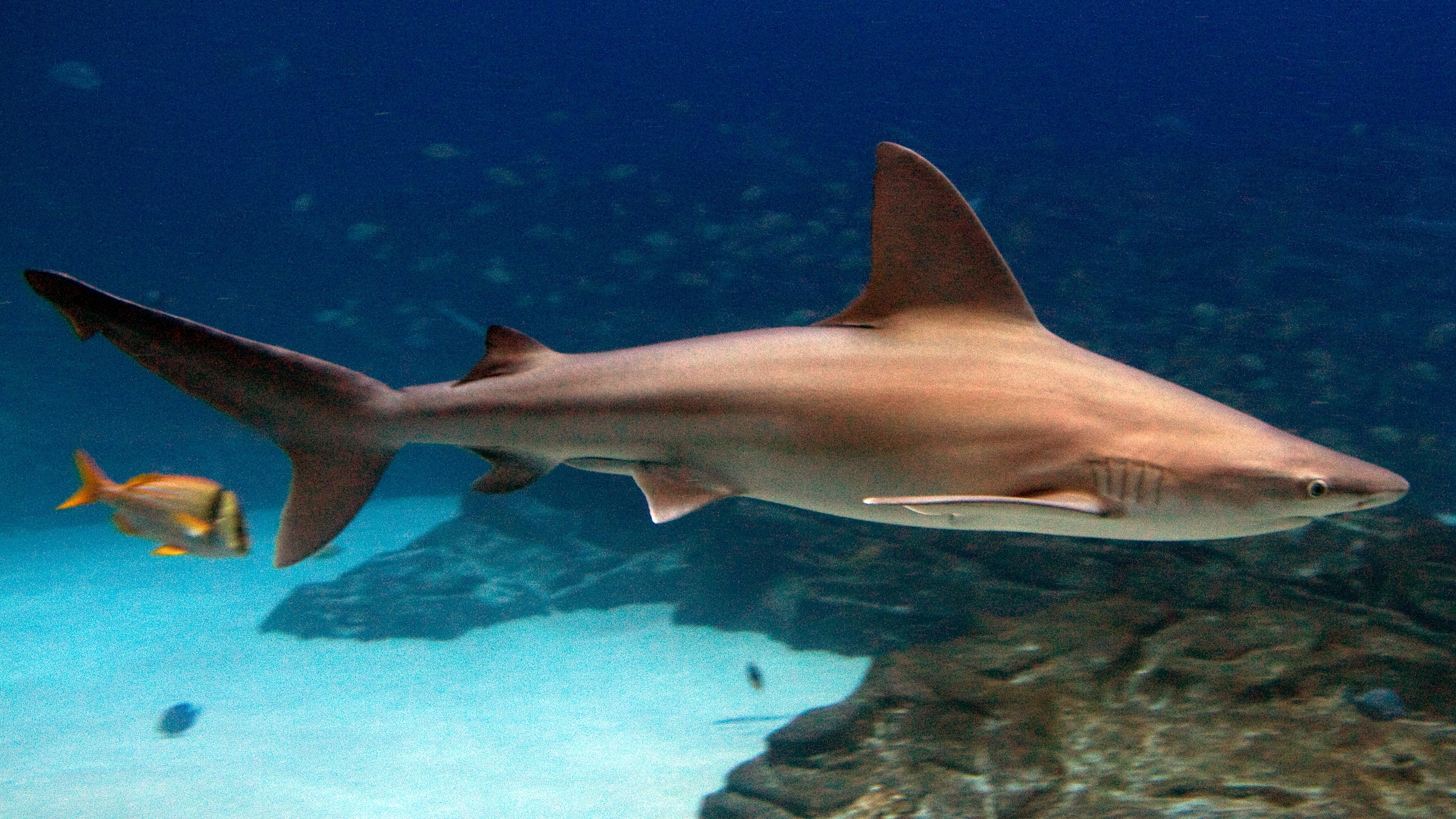
Triaenodon obesus is a small, slender reef shark easily recognized by its distinctive white-tipped dorsal and caudal fins, flattened head, and oval eyes with vertical pupils. Typically reaching around 1.5 to 1.7 meters in length, it is a nocturnal predator that spends daylight hours resting motionless in caves, under ledges, or on sandy patches within reef structures—a behavior enabled by its ability to pump water over its gills without swimming. At night it hunts reef fish, octopuses, and crustaceans, often cooperatively with other individuals, making it an important mesopredator that helps regulate reef fish populations and maintain ecosystem balance.
This species has a broad Indo-Pacific distribution, occurring in coastal waters from East Africa and the Red Sea through South and Southeast Asia to Australia, the Pacific Islands, and parts of the eastern Pacific including Mexico, Costa Rica, and Panama. It favors shallow marine neritic habitats, particularly coral reef flats, lagoons, and drop-offs, though it also ranges into oceanic waters.
The species faces ongoing pressure from targeted and incidental fishing, including capture for fins, meat, and the aquarium trade, as well as bycatch in reef fisheries. Recreational diving and related tourism activities can disturb resting individuals, and habitat degradation from coral reef alteration and coastal development further reduces suitable shelter and prey availability.
Conservation efforts include protections within marine protected areas and shark sanctuaries across parts of its range, national fishing regulations in some countries, and international trade monitoring. Despite these measures, population trends remain downward across much of its range, and the species is currently assessed as Vulnerable, with continued declines anticipated absent stronger enforcement of existing protections.
Whitetip Reef Sharks are mainly threatened by being caught in fishing nets and lines, both on purpose and as accidental bycatch, which reduces their numbers since they reproduce slowly. They're also disturbed by divers and other recreational activities around reefs, and their coral reef homes are changing due to environmental shifts like warming waters and coral degradation. These combined pressures appear to be ongoing and steady rather than clearly worsening or improving at this time.
Habitat
Conservation measures underway
Other threatened species in CARCHARHINIDAE

Threatened in American Samoa
Frequently asked questions
Why is Whitetip Reef Shark classified as Vulnerable?
Where does Whitetip Reef Shark live?
What are the main threats to Whitetip Reef Shark?
Get weekly conservation intelligence
One short digest a week of the most striking species and country data we ship, plus breaking conservation news paired with our database where it matters.
Free, no spam. One-click unsubscribe in every email.