Wallago attu
Overview
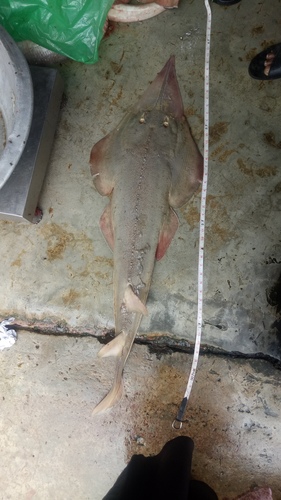
Wallago attu, commonly known as the helicopter catfish or wallago, is a large freshwater fish native to South and Southeast Asia. This predatory catfish can reach lengths exceeding 2 meters and weights of 45 kilograms, making it one of the largest catfish species in Asian river systems. Distinguished by its elongated body, prominent barbels, and distinctive helicopter-like dorsal fin, the species plays a crucial role as an apex predator in freshwater ecosystems, helping maintain fish population balance.
The species naturally inhabits major river systems across India, Pakistan, Bangladesh, Myanmar, Thailand, Cambodia, Vietnam, Laos, Nepal, China, and Sri Lanka. It prefers large rivers and their tributaries, typically occupying deeper waters with moderate to strong currents. The wallago requires extensive river connectivity for spawning migrations.
Wallago attu faces mounting pressures from multiple threats. Dam construction fragments river systems, blocking critical migration routes and altering flow patterns essential for reproduction. Invasive species compete for resources and habitat space.
Intensive fishing pressure targets this valuable commercial species, while habitat degradation from logging activities affects water quality and spawning grounds. Climate-induced droughts further stress remaining populations by reducing available habitat.
Conservation efforts focus primarily on habitat protection through establishment of fish sanctuaries in key river stretches and implementation of seasonal fishing restrictions during spawning periods. Some countries have introduced minimum size limits for commercial harvest.
The species' outlook remains concerning, with populations continuing to decline across most of its range. Without comprehensive river basin management and strengthened fishing regulations, Wallago attu faces continued population reduction throughout its native distribution.
Wallago attu, a large freshwater fish, faces multiple ongoing threats including dams and water management projects that disrupt river flows, invasive species and diseases that compete with or harm native populations, and habitat changes from logging and wood harvesting activities along waterways. The species is also threatened by droughts that reduce water levels, intentional hunting and trapping for food or trade, and broader habitat shifting from human development. All of these threats are currently ongoing and appear to be stable or intensifying rather than decreasing.
Habitat
Other threatened species in SILURIDAE
Threatened in Bangladesh



Frequently asked questions
Why is Wallago attu classified as Vulnerable?
Where does Wallago attu live?
What are the main threats to Wallago attu?
Get weekly conservation intelligence
One short digest a week of the most striking species and country data we ship, plus breaking conservation news paired with our database where it matters.
Free, no spam. One-click unsubscribe in every email.