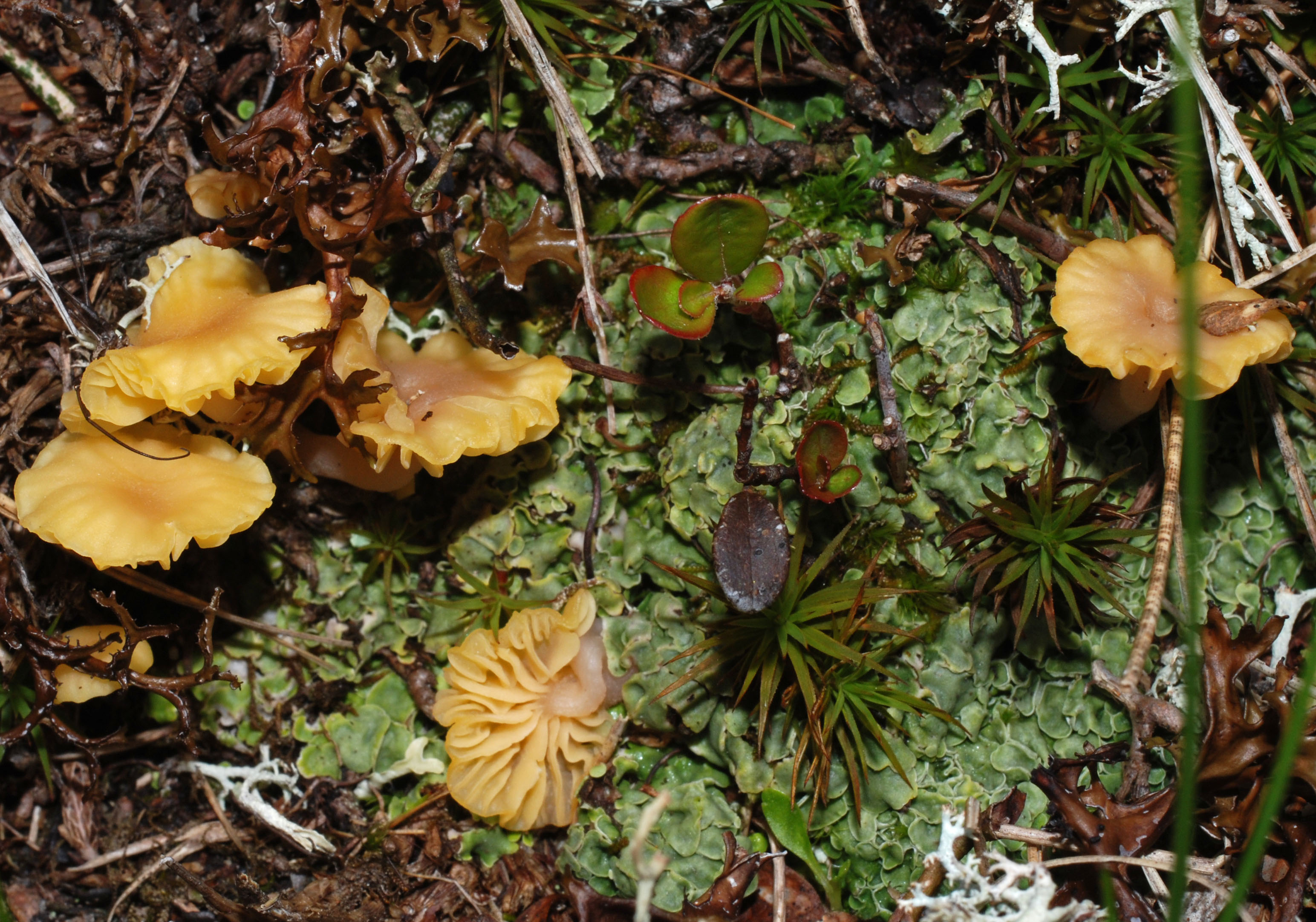
Arctic Mushroom Scales Lichen
Lichenomphalia hudsoniana
Photo: Wikimedia Commons (CC) via https://en.wikipedia.org/wiki/Lichenomphalia_hudsoniana
Overview
The Arctic Mushroom Scales Lichen (Lichenomphalia hudsoniana) is a remarkable composite organism classified as Critically Endangered by the IUCN, representing one of the most threatened lichen species in Arctic ecosystems. This distinctive species exhibits a unique dual morphology, combining both fungal fruiting bodies resembling small mushrooms and traditional lichen thalli with overlapping scale-like structures that give it its common name. The mushroom-like components typically measure 5-15mm in height with pale brown to grayish caps, while the associated lichen scales form intricate patterns on substrates.
Endemic to the Hudson Bay region of northern Canada, this species inhabits extremely specialized microhabitats within the Arctic tundra, particularly favoring areas where specific moisture regimes, substrate chemistry, and microclimatic conditions converge. It grows primarily on calcareous soils and weathered limestone outcrops in areas with consistent but not excessive moisture from snowmelt and fog. The species demonstrates extraordinary adaptation to harsh Arctic conditions, capable of surviving temperatures below -40°C and extended periods of darkness.
Its distribution appears limited to a handful of locations around Hudson Bay, making it exceptionally vulnerable to environmental changes. Recent collaborative research between Parks Canada and indigenous communities has led to the discovery of two previously unknown populations, offering renewed hope for the species' long-term survival and highlighting the critical importance of traditional ecological knowledge in conservation efforts.
Lichenomphalia hudsoniana faces severe threats from rapidly changing Arctic climate conditions, particularly altered precipitation patterns and temperature fluctuations that disrupt the precise moisture balance required for its survival. Infrastructure development and mineral exploration activities in the Hudson Bay region pose direct habitat destruction risks to its extremely limited range. The species' slow growth rate and apparent inability to disperse effectively between suitable habitat patches makes population recovery exceptionally challenging once local extinctions occur.
Habitat
This species occupies highly specialized Arctic tundra microhabitats characterized by calcareous substrates, particularly weathered limestone outcrops and calcium-rich soils with specific moisture regimes. It requires areas with consistent but moderate humidity from snowmelt and coastal fog, typically found in sheltered depressions and north-facing slopes within the Hudson Bay lowlands.
Other threatened species in Hygrophoraceae

Frequently asked questions
Why is Arctic Mushroom Scales Lichen classified as Critically Endangered?
Where does Arctic Mushroom Scales Lichen live?
What are the main threats to Arctic Mushroom Scales Lichen?
Get weekly conservation intelligence
One short digest a week of the most striking species and country data we ship, plus breaking conservation news paired with our database where it matters.
Free, no spam. One-click unsubscribe in every email.