Usambara Monkey Grasshopper
Euschmidtia uvarovi
Overview
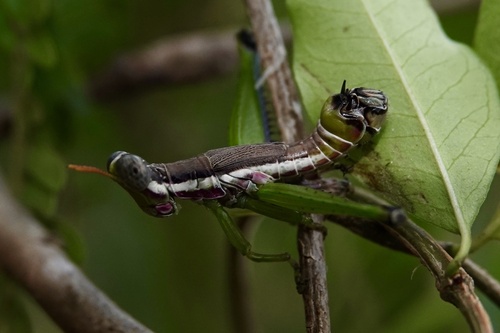
The Usambara Monkey Grasshopper (Euschmidtia uvarovi) is a small, cryptically colored orthopteran belonging to the monkey grasshopper family Eumastacidae, a group known for their compact bodies, short antennae, and limited dispersal ability compared to true grasshoppers. This species is endemic to the Usambara Mountains of northeastern Tanzania, part of the Eastern Arc Mountains, a global biodiversity hotspot renowned for high levels of endemism among invertebrates. Like many Eumastacidae, it is flightless or a weak flier, restricting it to specific patches of montane forest understory where it likely feeds on leaf litter, low vegetation, or fungal material, though detailed dietary and behavioural studies remain sparse.
The species is classified as Critically Endangered (CR) by the IUCN, reflecting its extremely restricted range and the ongoing degradation of Usambara forest habitat. Its survival is tightly linked to the persistence of intact montane forest fragments, which have been shrinking for decades due to human pressure. Population trend data are currently unknown, underscoring the need for targeted field surveys to establish baseline numbers and monitor change over time.
On a positive note, the Usambara Mountains are the focus of active regional conservation initiatives, including community-based forest protection programs and designated forest reserves that safeguard remaining habitat fragments critical to this and many other endemic species. Continued attention from conservation biologists working in the Eastern Arc region offers a genuine opportunity to document this grasshopper's ecology more fully and integrate it into broader habitat protection strategies, potentially improving its long-term prospects if forest corridors and reserves are maintained or expanded.
Euschmidtia uvarovi faces severe threats from habitat destruction due to agricultural expansion and urban development in its limited range. The species' extremely restricted distribution makes it particularly vulnerable to localized environmental changes and human activities. Climate change poses an additional threat through altered precipitation patterns that could affect the specific microhabitat conditions this species requires.
Habitat
This species inhabits specific microhabitats within arid and semi-arid regions, typically associated with particular soil types and vegetation communities. It requires undisturbed natural areas with specific moisture and temperature regimes that support its specialized ecological needs.
Conservation measures underway
Other threatened species in EUSCHMIDTIIDAE
Threatened in Tanzania
Frequently asked questions
Why is Usambara Monkey Grasshopper classified as Critically Endangered?
Where does Usambara Monkey Grasshopper live?
What are the main threats to Usambara Monkey Grasshopper?
Get weekly conservation intelligence
One short digest a week of the most striking species and country data we ship, plus breaking conservation news paired with our database where it matters.
Free, no spam. One-click unsubscribe in every email.