
Canterbury Umbrella Palm
Hedyscepe canterburyana
Photo: Photo: Wikimedia Commons, CC BY-SA
Overview
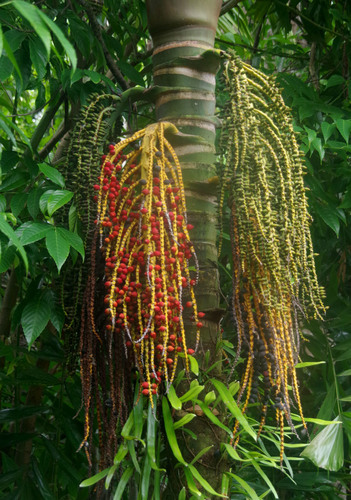
Hedyscepe canterburyana is a solitary palm distinguished by a smooth, grey, ringed trunk and a crownshaft topped with pinnate, arching fronds. Its inflorescences emerge below the crownshaft, producing small flowers followed by reddish fruit that provide a food source for local fauna. As a canopy or subcanopy tree, it contributes structurally to forest composition and offers habitat and shelter to birds and invertebrates in its native range.
The species is endemic to Lord Howe Island, Australia, where it occupies subtropical and tropical moist forest, both lowland and montane, as well as shrubland at higher elevations. It typically grows on ridges and slopes, often at the upper limits of the island's forested zones.
The palm's decline stems from its already extremely small population and restricted geographic range, which leaves it highly vulnerable to localized disturbances. Invasive feral pigs damage seedlings and root systems, undermining natural regeneration, while competing invasive plant species reduce space and resources for young palms. Introduced pests and diseases pose additional pressure.
Climate change is altering rainfall patterns and contributing to droughts, stressing established individuals and limiting seedling survival. Tourism and recreational activity on the island further disturb habitat in some areas.
Conservation efforts on Lord Howe Island include feral animal control programs, particularly targeting pigs, along with weed management to reduce competitive pressure on native vegetation. Habitat protection measures tied to the island's status as a UNESCO World Heritage Site also support the species indirectly.
Given its small, restricted population and multiple ongoing threats, the species remains classified as Critically Endangered with a decreasing population trend. Continued management of invasive species and climate-related pressures will be necessary to stabilize its numbers.
This palm faces pressure from feral pigs that trample seedlings and tear up roots, along with invasive plants that crowd out young trees. It also struggles because it exists in such small numbers within a very limited area, making it vulnerable to droughts and shifting rainfall caused by climate change, as well as disturbance from tourists visiting its habitat. These threats appear to be ongoing and stable rather than clearly worsening, though the combination of a tiny population and multiple pressures keeps the species at continued risk.
Habitat
This endemic palm occurs exclusively in the subtropical rainforest of Lord Howe Island, growing in moist, well-drained soils on volcanic slopes and gullies. The species is restricted to elevations between 300-400 meters in areas with high humidity and protection from strong winds.
Conservation measures underway
Other threatened species in ARECACEAE
Threatened in Australia
Frequently asked questions
Why is Canterbury Umbrella Palm classified as Critically Endangered?
Where does Canterbury Umbrella Palm live?
What are the main threats to Canterbury Umbrella Palm?
Get weekly conservation intelligence
One short digest a week of the most striking species and country data we ship, plus breaking conservation news paired with our database where it matters.
Free, no spam. One-click unsubscribe in every email.