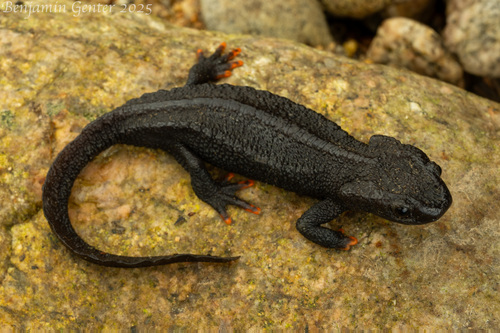
Anhui Knobby Newt
Tylototriton anhuiensis
Photo: (c) Benjamin Genter, all rights reserved, uploaded by Benjamin Genter
Overview
Tylototriton anhuiensis, commonly known as the Anhui crocodile newt, is a critically endangered salamander species endemic to China. This distinctive amphibian belongs to the family Salamandridae and is characterized by its robust build, warty skin texture, and prominent dorsal ridge that gives crocodile newts their common name. The species was first described relatively recently and has a highly restricted distribution range within Anhui Province, eastern China.
Like other members of the Tylototriton genus, T. anhuiensis exhibits a biphasic life cycle, with aquatic larvae that undergo metamorphosis to become terrestrial adults, though adults return to water for breeding. The species faces severe threats from habitat destruction and fragmentation due to rapid urbanization, agricultural expansion, and infrastructure development in its limited range.
Deforestation and the conversion of natural habitats to human-dominated landscapes have significantly reduced available breeding sites and terrestrial habitat. Water pollution from agricultural runoff and industrial activities further compromises the aquatic environments essential for reproduction and larval development. The species' restricted range makes it particularly vulnerable to local extinctions, as populations have little opportunity for recolonization if extirpated.
Climate change may pose additional challenges by altering precipitation patterns and temperature regimes that affect breeding cycles. Conservation efforts for T. anhuiensis remain limited, though the species would benefit from habitat protection measures, captive breeding programs, and comprehensive population surveys to better understand its current status and distribution.
Tylototriton anhuiensis faces severe threats from habitat destruction and fragmentation caused by urbanization, agricultural expansion, and infrastructure development within its restricted range in Anhui Province. Water pollution from agricultural and industrial sources degrades the aquatic breeding habitats essential for reproduction. The species' extremely limited distribution makes it highly vulnerable to local extinction events.
Habitat
Tylototriton anhuiensis inhabits forested areas and associated aquatic environments in Anhui Province, eastern China. The species requires both terrestrial forest habitat for adult life stages and clean freshwater bodies such as ponds or streams for breeding and larval development.
Conservation measures underway
Other threatened species in SALAMANDRIDAE
Threatened in China
Frequently asked questions
Why is Anhui Knobby Newt classified as Critically Endangered?
Where does Anhui Knobby Newt live?
What are the main threats to Anhui Knobby Newt?
Get weekly conservation intelligence
One short digest a week of the most striking species and country data we ship, plus breaking conservation news paired with our database where it matters.
Free, no spam. One-click unsubscribe in every email.