
Trinidad Piping-guan
Pipile pipile
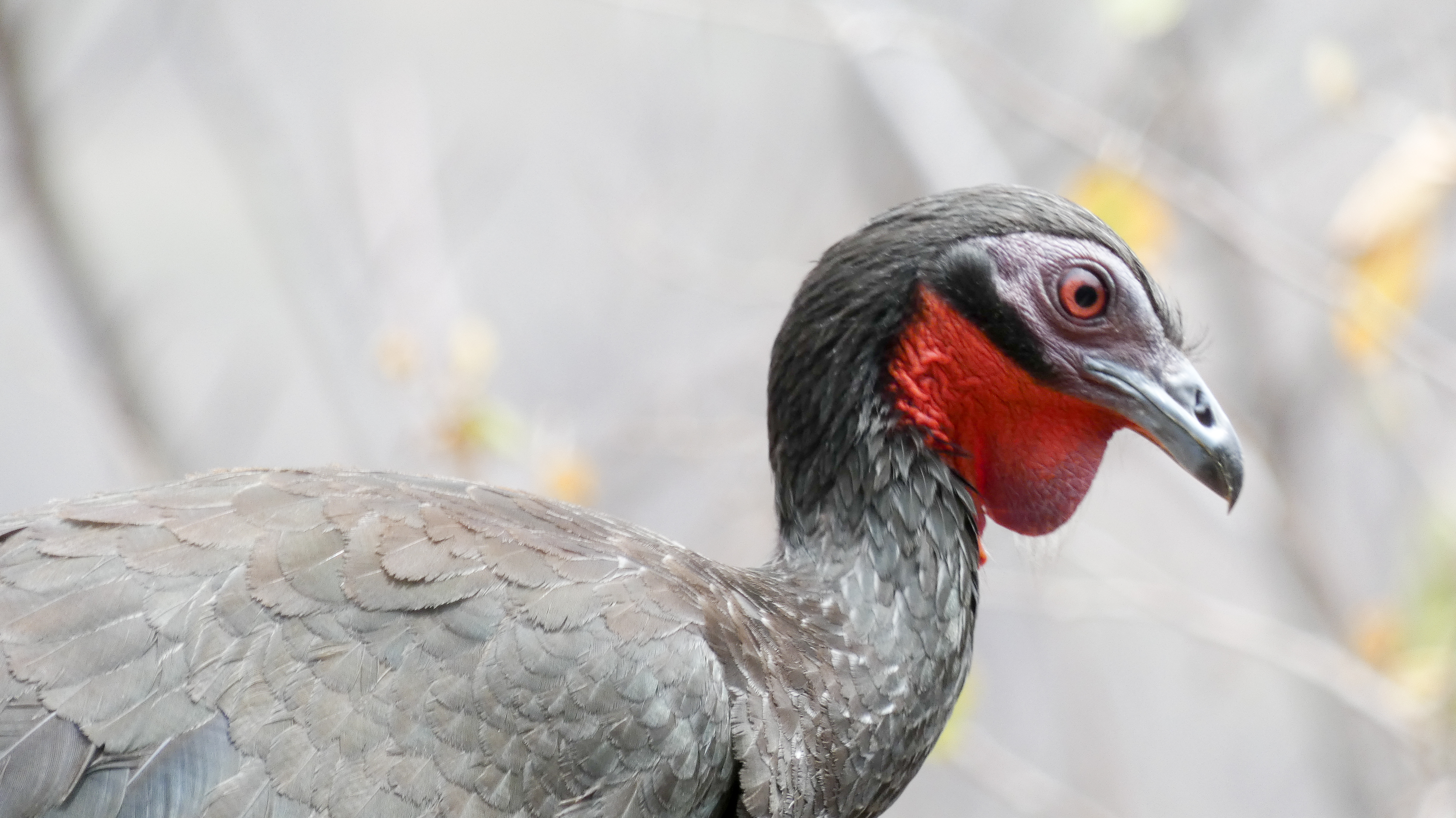
Photo: Photo: Wikimedia Commons, CC BY-SA
Overview
The Trinidad piping guan locally known as the pawi, is a bird in the chachalaca, guan and curassow family Cracidae, endemic to the island of Trinidad. It is a large bird, somewhat resembling a turkey in appearance, and research has shown that its nearest living relative is the blue-throated piping guan from South America. It is a mainly arboreal species feeding mostly on fruit, but also on flowers and leaves.
At one time abundant, it has declined in numbers and been extirpated from much of its natural range and the International Union for Conservation of Nature has rated the bird as "critically endangered".
The Trinidad Piping-Guan faces severe population decline primarily due to extensive hunting pressure for food and sport, which has eliminated the species from most of its historical range on Trinidad. Habitat destruction through deforestation and agricultural conversion has further reduced available forest cover, while the species' naturally low reproductive rate makes recovery extremely difficult. Small remaining populations are highly vulnerable to local extinctions from continued hunting and habitat fragmentation.
Habitat
The Trinidad Piping-Guan inhabits primary and secondary tropical rainforests, preferring the forest canopy where it feeds on fruits, leaves, and flowers. It requires large tracts of continuous forest habitat and is typically found in mountainous regions with dense tree cover.
Conservation measures underway
Other threatened species in CRACIDAE


Threatened in Bolivia
Frequently asked questions
Why is Trinidad Piping-guan classified as Critically Endangered?
Where does Trinidad Piping-guan live?
What are the main threats to Trinidad Piping-guan?
Get weekly conservation intelligence
One short digest a week of the most striking species and country data we ship, plus breaking conservation news paired with our database where it matters.
Free, no spam. One-click unsubscribe in every email.