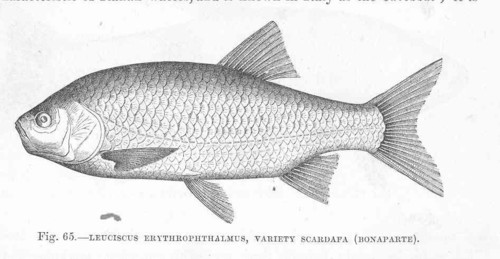
Tiber Rudd
Scardinius scardafa
Photo: Harry Govier Seeley, no known copyright restrictions (public domain)
Overview
Scardinius scardafa is a freshwater fish species endemic to specific river systems in the Mediterranean region. This cyprinid fish belongs to the rudd genus and represents one of the most endangered freshwater fish species in its native range. The species inhabits slow-moving waters including rivers, streams, and associated wetland areas where it feeds on aquatic vegetation, small invertebrates, and organic matter.
Scardinius scardafa has experienced severe population declines that have led to its classification as Critically Endangered by the IUCN, though current population trends remain poorly understood due to limited monitoring data. The primary threats facing this species include habitat degradation through water pollution, agricultural runoff, and urban development pressures on freshwater ecosystems. Dam construction and water extraction for irrigation have altered natural flow regimes and fragmented remaining populations.
Introduction of non-native fish species has created additional competitive pressures and potential hybridization risks. Climate change impacts, including altered precipitation patterns and increased water temperatures, pose emerging threats to the species' already limited habitat. Conservation efforts for Scardinius scardafa remain limited, reflecting the broader challenges facing endemic freshwater fish species in Mediterranean regions.
Effective conservation requires comprehensive habitat protection, water quality improvement, and population monitoring programs. The species' critical status highlights the urgent need for coordinated conservation action to prevent extinction of this endemic freshwater fish.
Scardinius scardafa faces severe threats from habitat degradation caused by water pollution, agricultural runoff, and urban development pressures on its freshwater ecosystems. Dam construction and water extraction have fragmented populations and altered natural water flow patterns. Introduction of non-native fish species and climate change impacts further threaten the remaining populations of this critically endangered endemic species.
Habitat
Scardinius scardafa inhabits slow-moving freshwater systems including rivers, streams, and associated wetland areas in the Mediterranean region. The species prefers areas with aquatic vegetation where it can find food and shelter in these increasingly threatened freshwater ecosystems.
Conservation measures underway
Other threatened species in LEUCISCIDAE
Threatened in Italy
Frequently asked questions
Why is Tiber Rudd classified as Critically Endangered?
Where does Tiber Rudd live?
What are the main threats to Tiber Rudd?
Get weekly conservation intelligence
One short digest a week of the most striking species and country data we ship, plus breaking conservation news paired with our database where it matters.
Free, no spam. One-click unsubscribe in every email.