Thesium psilotocladum
Overview
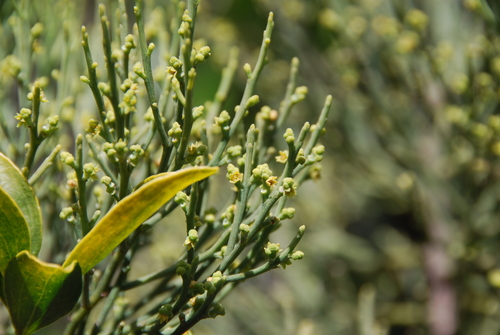
Thesium psilotocladum is a slender, semi-parasitic shrub in the sandalwood family (Santalaceae), belonging to a genus known for tapping into the root systems of neighbouring plants to supplement its own nutrient uptake. Its species name, referring to slender or thread-like branches, reflects the wiry, understated growth form typical of many Thesium species adapted to nutrient-poor soils. This plant is classified as Critically Endangered (CR) by the IUCN, placing it among the most threatened plants known to science.
It is restricted to a narrow range within South Africa's fynbos biome, a fire-adapted shrubland renowned for exceptional plant diversity and endemism, where it grows in specific soil and vegetation conditions that are increasingly rare and fragmented. Population trend data remain unknown, a common challenge for range-restricted plants that receive limited botanical survey attention, though the CR listing indicates that available evidence points to a very small population size, restricted area of occupancy, or both. The primary pressures facing this species stem from ongoing habitat transformation in the Cape Floristic Region, including agricultural conversion, urban expansion, and altered fire regimes that can disrupt the delicate ecological balance fynbos plants depend upon.
As a hemi-parasite, its survival is also tied to the persistence of specific host plant communities, making habitat degradation doubly consequential. On a positive note, the fynbos biome is the focus of substantial conservation investment, including protected area networks and habitat restoration initiatives led by South African conservation authorities and botanical institutions, offering a meaningful opportunity for targeted intervention if this species' specific populations can be located, monitored, and incorporated into existing regional conservation planning.
Thesium psilotocladum faces severe threats from agricultural expansion and intensive farming practices that have destroyed much of its native grassland habitat. Urban development and infrastructure projects continue to fragment the remaining populations, while changes in traditional land management practices have altered the ecological conditions this parasitic plant requires to survive. The species' highly specialized nature as a root parasite makes it particularly vulnerable to habitat degradation.
Habitat
This species inhabits dry grasslands, meadows, and open woodland edges in temperate regions. As a parasitic plant, it requires specific host plants and thrives in areas with traditional extensive grazing or mowing regimes that maintain open, species-rich grassland communities.
Conservation measures underway
Other threatened species in SANTALACEAE
Threatened in Spain
Frequently asked questions
Why is Thesium psilotocladum classified as Critically Endangered?
Where does Thesium psilotocladum live?
What are the main threats to Thesium psilotocladum?
Get weekly conservation intelligence
One short digest a week of the most striking species and country data we ship, plus breaking conservation news paired with our database where it matters.
Free, no spam. One-click unsubscribe in every email.