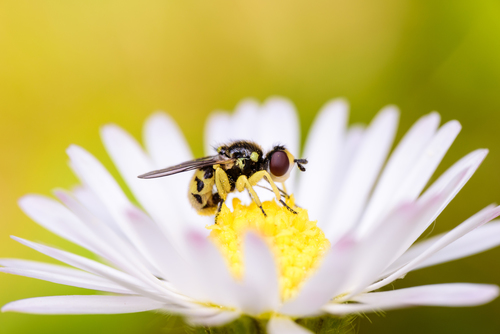
Dalmannia punctata
Photo: (c) Ewen Amossé, some rights reserved (CC BY-NC), uploaded by Ewen Amossé
Overview
Dalmannia punctata, commonly known as the black-spotted thick-headed fly, is a distinctive hoverfly species belonging to the family Conopidae. This medium-sized fly is characterized by its robust build, prominent head, and distinctive black spotting pattern on a yellowish background. The species is endemic to Scandinavia, with historical records primarily from Sweden and Norway.
D. punctata inhabits old-growth coniferous forests, particularly areas with mature spruce and pine stands that provide the specific microhabitat conditions required for its survival. Adults are typically observed during summer months, feeding on nectar from various flowering plants in forest clearings and edges.
The larvae are endoparasitoids, developing inside other insects, which makes the species dependent on healthy populations of suitable host species. Currently classified as Critically Endangered, D. punctata faces severe threats from habitat loss due to intensive forestry practices that remove old-growth forest stands.
The conversion of natural forests to managed plantations has significantly reduced available habitat, while climate change may be altering the delicate ecological relationships the species depends upon. Limited recent sightings suggest the population may be extremely small and fragmented. Conservation efforts focus on protecting remaining old-growth forest habitats and implementing sustainable forestry practices that maintain the structural diversity necessary for the species' survival.
Targeted surveys are needed to better understand current population status and distribution.
The primary threat to Dalmannia punctata is habitat loss from intensive forestry practices that remove old-growth coniferous forests essential for its survival. Climate change may be disrupting the ecological relationships between the species and its host insects. The extremely limited recent sightings suggest the population is critically small and potentially fragmented.
Habitat
Dalmannia punctata inhabits old-growth coniferous forests, particularly mature spruce and pine stands in Scandinavia. The species requires forest areas with structural diversity, including clearings and edges where adults can access nectar sources.
Other threatened species in Conopidae

Threatened in China
Frequently asked questions
Why is Dalmannia punctata classified as Critically Endangered?
Where does Dalmannia punctata live?
What are the main threats to Dalmannia punctata?
Get weekly conservation intelligence
One short digest a week of the most striking species and country data we ship, plus breaking conservation news paired with our database where it matters.
Free, no spam. One-click unsubscribe in every email.