
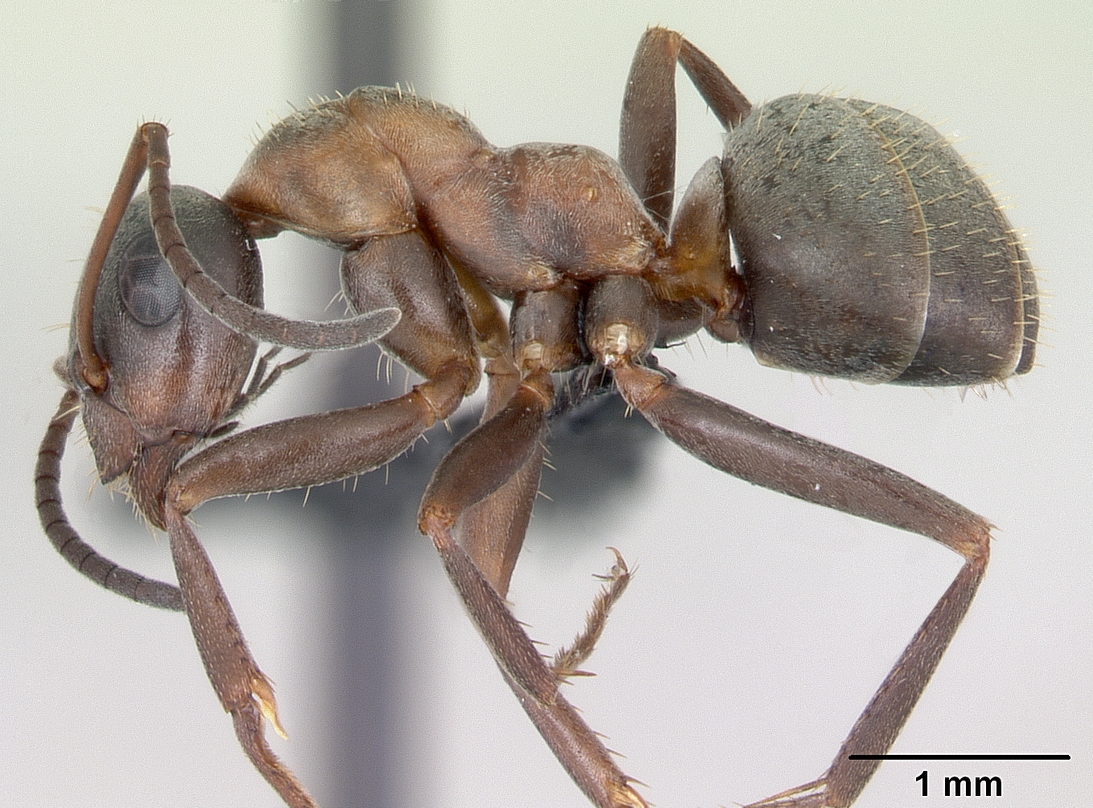
Hairy Carpenter Ant
Camponotus vagus
Photo: Wikimedia Commons (CC) via https://en.wikipedia.org/wiki/Camponotus_vagus
Overview
A detailed profile for this species is sourced from the IUCN Red List of Threatened Species as assessments become available.
Camponotus vagus faces significant population declines across its European range due to intensive agricultural practices that eliminate the dead wood and mature trees essential for colony establishment. Urban development and forest management practices that remove fallen logs and standing dead trees have fragmented suitable nesting habitats. Climate change may be altering the species' thermal requirements, as these large black ants depend on specific temperature regimes for successful reproduction and colony development.
Habitat
This species inhabits mature deciduous and mixed forests where it nests in dead wood, fallen logs, and tree stumps, requiring well-established woodland ecosystems with abundant decaying timber. Colonies are also found in forest edges and parklands with sufficient dead wood resources and minimal human disturbance.
Other threatened species in Formicidae

Threatened in Albania

Frequently asked questions
Why is Hairy Carpenter Ant classified as Vulnerable?
Where does Hairy Carpenter Ant live?
What are the main threats to Hairy Carpenter Ant?
Get weekly conservation intelligence
One short digest a week of the most striking species and country data we ship, plus breaking conservation news paired with our database where it matters.
Free, no spam. One-click unsubscribe in every email.