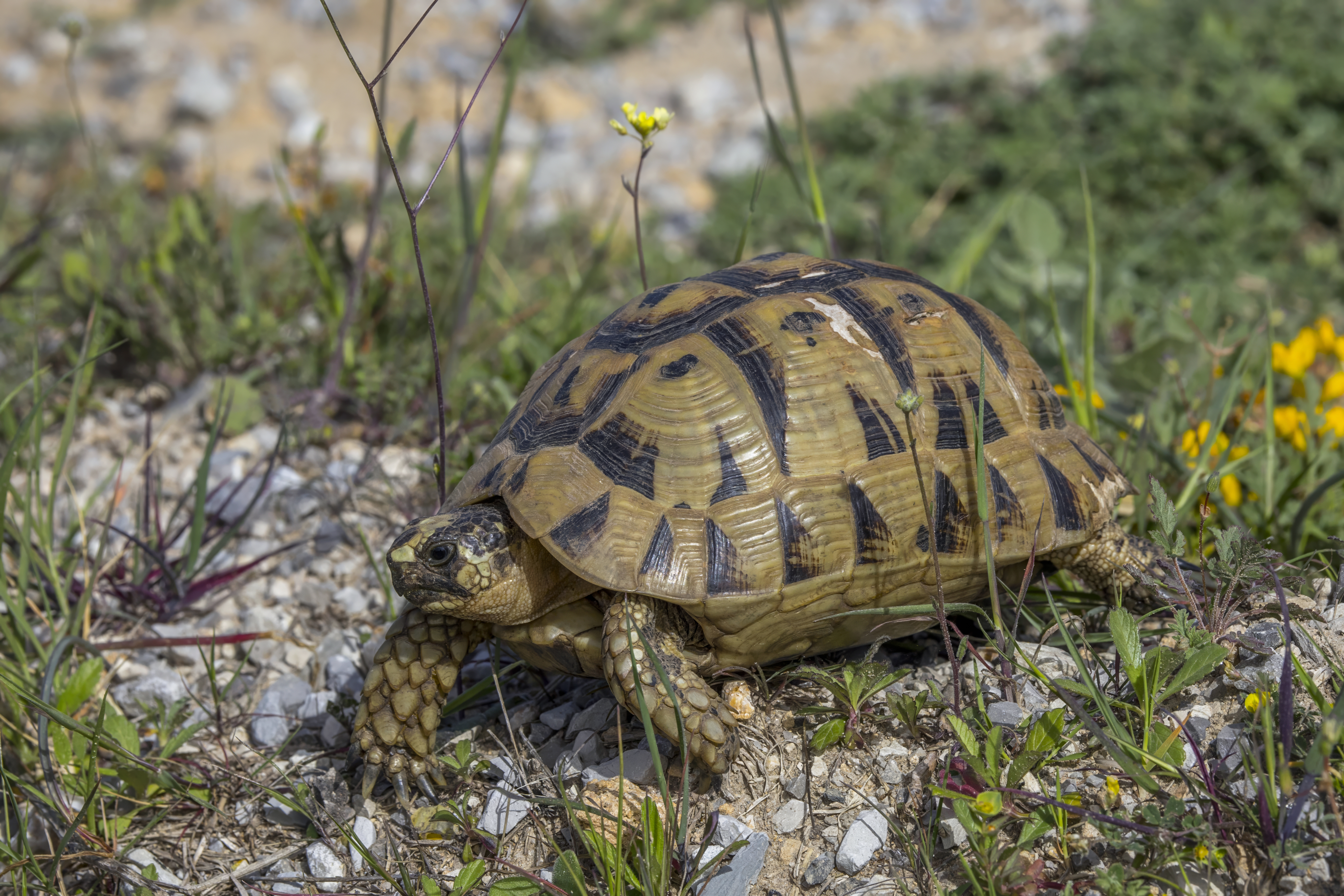
Testudo graeca
Photo: Wikimedia Commons (CC) via https://en.wikipedia.org/wiki/Greek_tortoise
Overview
A detailed profile for this species is sourced from the IUCN Red List of Threatened Species as assessments become available.
The Mediterranean spur-thighed tortoise faces severe population declines primarily due to extensive collection for the international pet trade, which has removed millions of individuals from wild populations across its range. Habitat degradation from agricultural intensification, urban development, and overgrazing by livestock has fragmented remaining populations and reduced suitable nesting sites. Climate change poses an emerging threat through increased drought frequency and altered vegetation patterns in its already arid habitats.
Habitat
Mediterranean spur-thighed tortoises inhabit dry, rocky hillsides, scrublands, oak woodlands, and semi-arid grasslands across the Mediterranean basin. They prefer areas with scattered vegetation that provides both food sources and shelter, typically at elevations from sea level to 1,500 meters.
Conservation measures underway
Other threatened species in TESTUDINIDAE


Frequently asked questions
Why is Testudo graeca classified as Vulnerable?
Where does Testudo graeca live?
What are the main threats to Testudo graeca?
Get weekly conservation intelligence
One short digest a week of the most striking species and country data we ship, plus breaking conservation news paired with our database where it matters.
Free, no spam. One-click unsubscribe in every email.