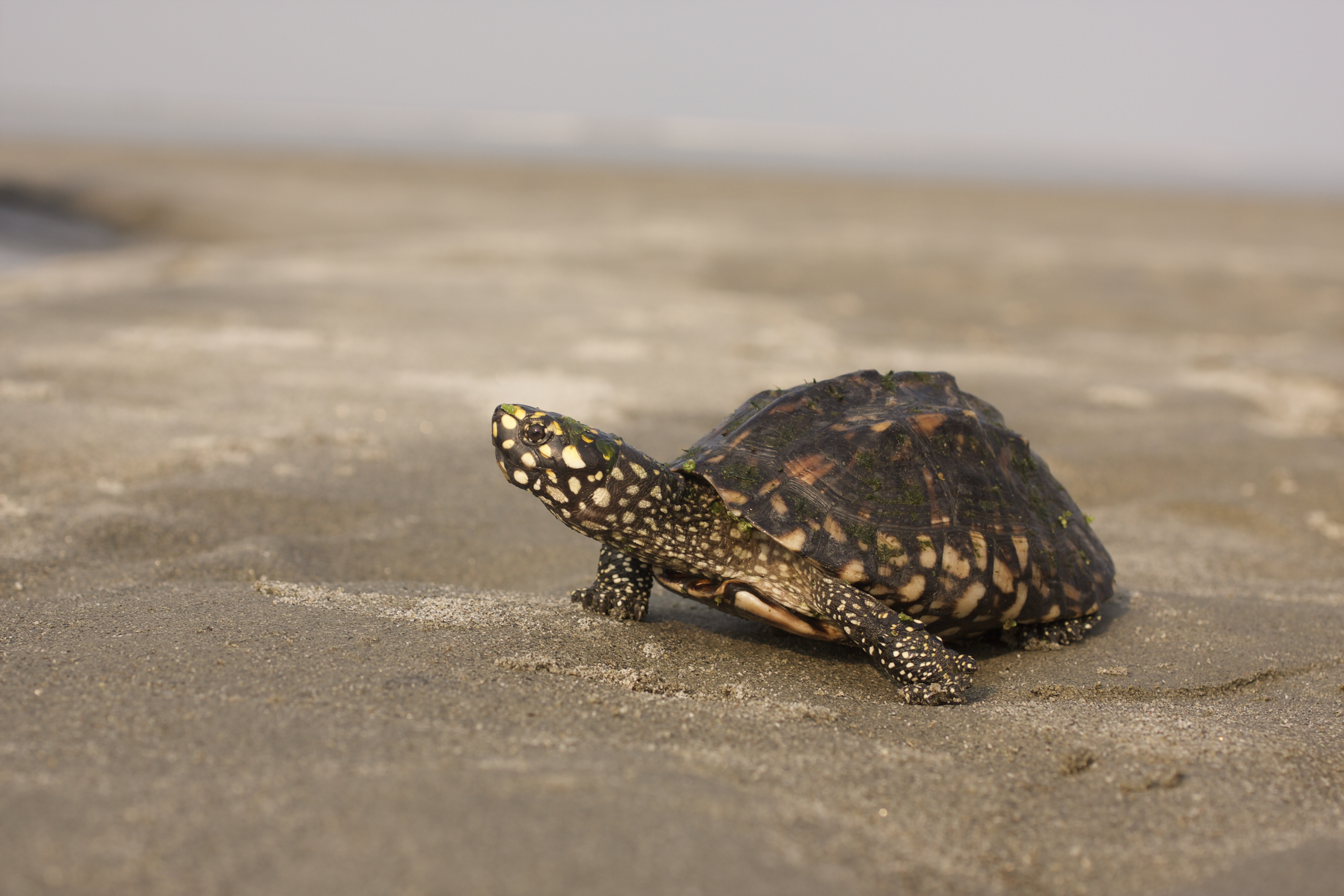
Spotted Pond Turtle
Geoclemys hamiltonii
Photo: Wikimedia Commons (CC) via https://en.wikipedia.org/wiki/Black_pond_turtle
Overview
Hamilton's pond turtle is a medium-sized freshwater turtle endemic to the Indian subcontinent. Adults typically measure 15-20 cm in shell length, with a distinctive dark brown to black carapace marked by yellow or cream-colored spots and lines. The species exhibits pronounced sexual dimorphism, with males developing longer, thicker tails and a concave plastron.
These semi-aquatic turtles are omnivorous, feeding on aquatic vegetation, insects, small fish, and carrion, playing an important role in maintaining ecosystem balance in freshwater habitats.
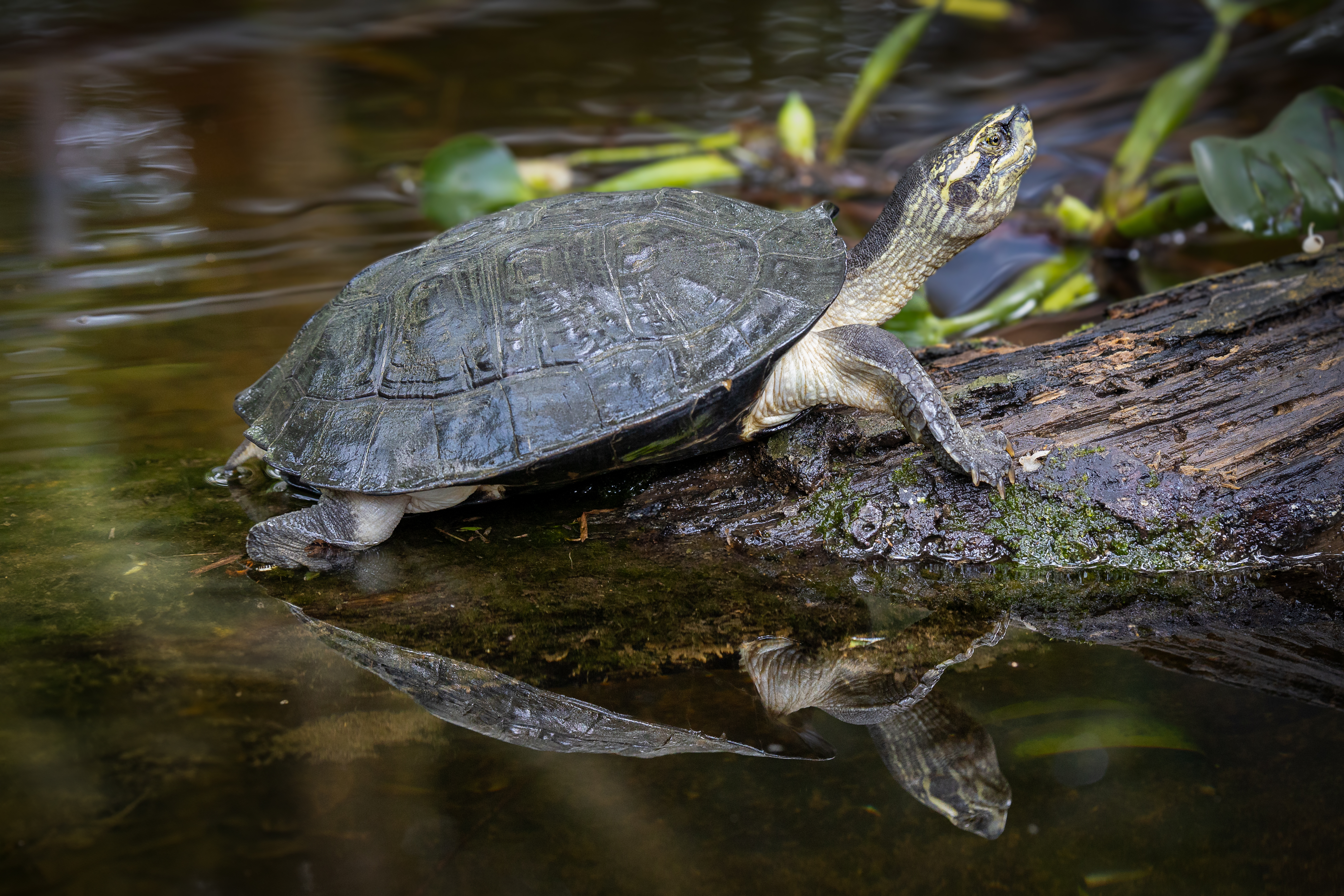
The species inhabits slow-moving rivers, ponds, marshes, and irrigation canals across Bangladesh, India, Nepal, and Pakistan. They prefer shallow waters with muddy substrates and abundant vegetation, often basking on logs or rocks during daylight hours.
Hamilton's pond turtle faces severe population declines due to multiple pressures. Agricultural expansion has destroyed critical wetland habitats, while irrigation projects alter water flow patterns essential for breeding. The species is heavily exploited for local consumption and traditional medicine, with adults frequently captured during nesting periods. Conversion of natural wetlands to agricultural land continues to fragment remaining populations.
Conservation efforts include habitat protection in several protected areas and captive breeding programs in India and Nepal. Local community education initiatives aim to reduce hunting pressure, while some regions have implemented seasonal collection bans during breeding periods.
The species' outlook remains concerning despite conservation measures. Continued habitat loss and persistent hunting pressure suggest populations will likely continue declining without more comprehensive protection strategies and stronger enforcement of existing regulations.
The Hamilton's pond turtle faces three main threats that are all currently happening. Farmers are converting the turtle's natural habitat into cropland for growing food and other plants, while people are actively hunting and trapping these turtles, likely for food or the pet trade. The status of these threats appears to be ongoing and stable rather than getting worse or better.
Habitat
Conservation measures underway
Other threatened species in GEOEMYDIDAE


Threatened in Bangladesh



Frequently asked questions
Why is Spotted Pond Turtle classified as Endangered?
Where does Spotted Pond Turtle live?
What are the main threats to Spotted Pond Turtle?
Get weekly conservation intelligence
One short digest a week of the most striking species and country data we ship, plus breaking conservation news paired with our database where it matters.
Free, no spam. One-click unsubscribe in every email.