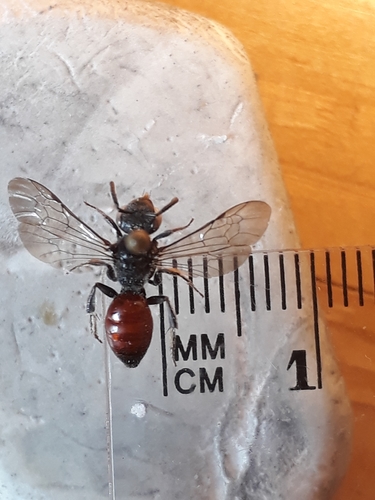
Spined Blood Bee
Sphecodes spinulosus
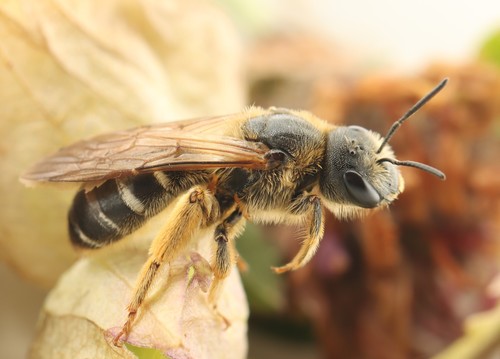
Photo: (c) George Allen, some rights reserved (CC BY-NC), uploaded by George Allen
Overview
The Spined Blood Bee (Sphecodes spinulosus) is a small parasitic bee species belonging to the family Halictidae. These bees are characterized by their distinctive reddish-brown coloration and spined body structure, which gives them their common name. As cuckoo bees, they do not collect pollen or build their own nests, but instead parasitize the nests of other ground-nesting bee species, particularly sweat bees in the genus Lasioglossum.
Females locate host nests and lay their eggs inside, where the developing larvae consume the host's provisions and offspring. The species has an extremely limited known distribution and has been recorded from very few locations, contributing to its critically endangered status. Historical records suggest the species was once present in specific regions with suitable sandy soils and diverse flowering plant communities.
The primary threats to Sphecodes spinulosus include habitat loss and degradation, particularly the destruction of the specialized sandy soil environments required by both the species and its hosts. Agricultural intensification, urban development, and changes in land management practices have reduced available nesting sites. The decline of host bee populations also directly impacts this parasitic species.
Climate change may further threaten the delicate ecological relationships between the parasite and its hosts. Conservation efforts are limited due to the species' rarity and poorly understood ecology, though habitat protection and restoration of suitable sandy grassland environments would benefit both this species and its host bees.
The Spined Blood Bee faces severe threats from habitat loss and degradation, particularly the destruction of sandy soil environments essential for both the species and its host bees. Agricultural intensification and urban development have eliminated many suitable nesting sites, while the decline of host bee populations directly impacts this parasitic species.
Habitat
Sphecodes spinulosus inhabits areas with sandy soils and diverse flowering plant communities, typically in grasslands, heathlands, or coastal dunes. The species requires proximity to nesting sites of its host bees, particularly ground-nesting sweat bees that construct burrows in loose, well-drained sandy substrates.
Other threatened species in Halictidae
Threatened in Armenia


Frequently asked questions
Why is Spined Blood Bee classified as Critically Endangered?
Where does Spined Blood Bee live?
What are the main threats to Spined Blood Bee?
Get weekly conservation intelligence
One short digest a week of the most striking species and country data we ship, plus breaking conservation news paired with our database where it matters.
Free, no spam. One-click unsubscribe in every email.