
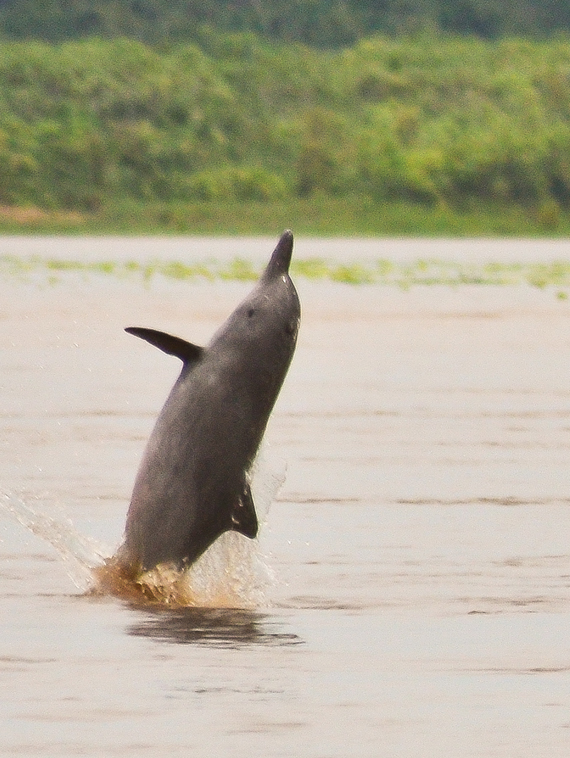
Atlantic Humpback Dolphin
Sousa teuszii
Photo: Wikimedia Commons (CC) via https://en.wikipedia.org/wiki/Atlantic_humpback_dolphin
Overview
A detailed profile for this species is sourced from the IUCN Red List of Threatened Species as assessments become available.
The Atlantic humpback dolphin faces severe population decline primarily due to intensive fishing activities along West Africa's coast, where bycatch in gillnets and other fishing gear represents the most immediate threat. Coastal development and port construction have degraded critical shallow-water habitats, while pollution from industrial activities and urban runoff further compromises water quality in their nearshore environment. Climate change is altering prey distribution and ocean conditions, adding additional stress to an already vulnerable population estimated at fewer than 3,000 individuals.
Habitat
Atlantic humpback dolphins inhabit shallow coastal waters, estuaries, and river mouths along the West African coast from Morocco to Angola. They prefer nearshore environments with depths typically less than 20 meters, often found in turbid waters near mangrove systems and river deltas.
Conservation measures underway
Other threatened species in DELPHINIDAE

Threatened in Angola



Frequently asked questions
Why is Atlantic Humpback Dolphin classified as Critically Endangered?
Where does Atlantic Humpback Dolphin live?
What are the main threats to Atlantic Humpback Dolphin?
Get weekly conservation intelligence
One short digest a week of the most striking species and country data we ship, plus breaking conservation news paired with our database where it matters.
Free, no spam. One-click unsubscribe in every email.