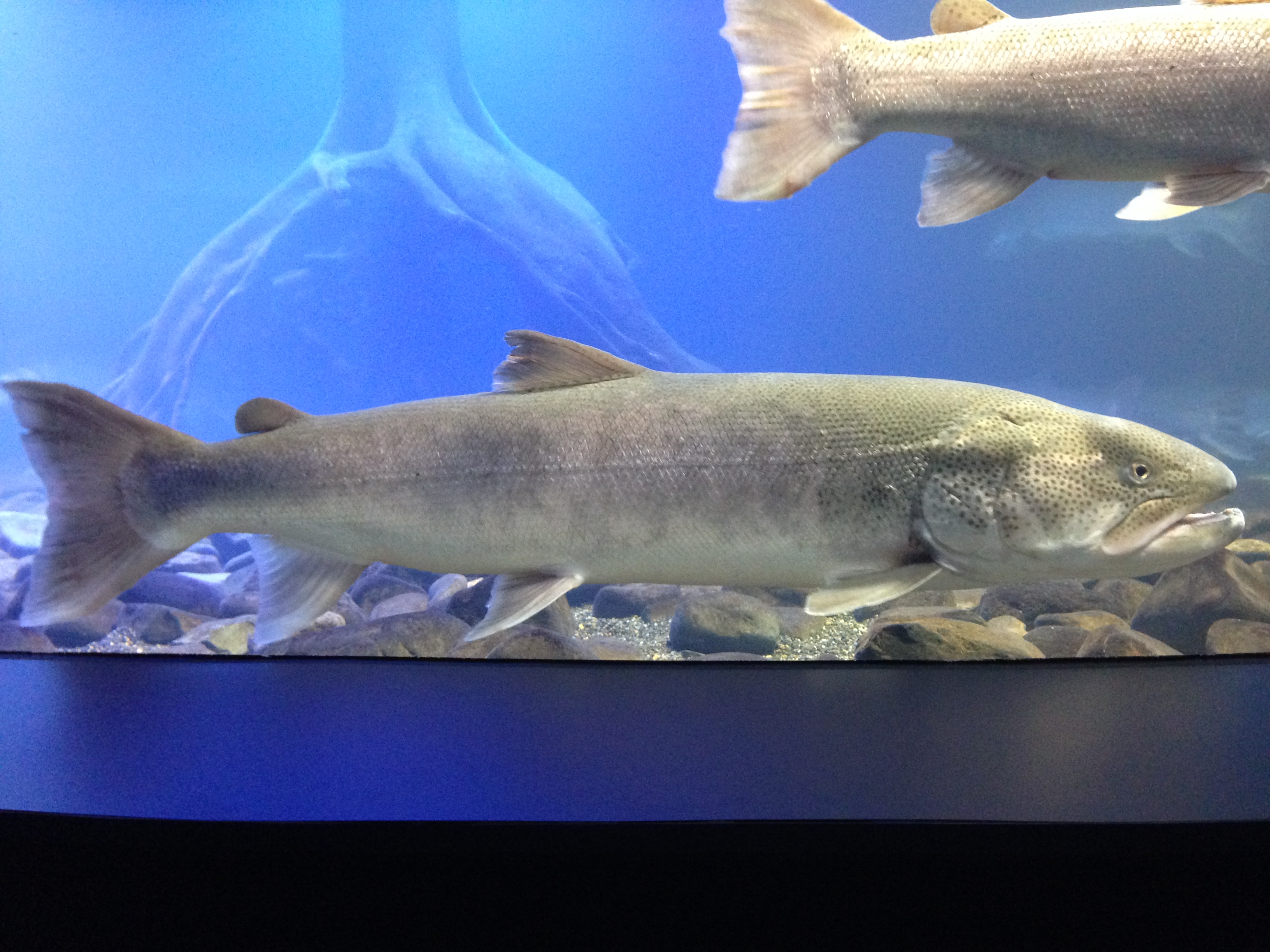
Sakhalin Taimen
Parahucho perryi
Photo: Wikimedia Commons (CC) via https://en.wikipedia.org/wiki/Sakhalin_taimen
Overview
The Sakhalin taimen, also known as the Japanese huchen or stringfish, is a large species of salmonid freshwater fish in Northeast Asia, found in the lakes and large rivers of Primorsky, Khabarovsk, Sakhalin and Kuril Islands of Far Eastern Russia, as well as Hokkaido of Japan. Although often placed in the genus Hucho, molecular phylogenetic and other evidence has shown that it belongs in its own monotypic genus Parahucho.
Parahucho perryi faces severe population decline primarily due to dam construction and river modification throughout its range, which fragments populations and blocks critical spawning migrations. Overfishing has historically depleted stocks, while climate change increasingly affects water temperatures and flow patterns essential for successful reproduction. Habitat degradation from logging, agriculture, and urban development continues to reduce the quality of riparian zones and spawning grounds.
Habitat
Parahucho perryi inhabits cold, fast-flowing rivers and streams in the North Pacific region, particularly in Russia, Japan, Korea, and northeastern China. The species requires pristine freshwater systems with gravel beds for spawning and may migrate to coastal waters during certain life stages.
Conservation measures underway
Other threatened species in SALMONIDAE
Threatened in Canada
Frequently asked questions
Why is Sakhalin Taimen classified as Critically Endangered?
Where does Sakhalin Taimen live?
What are the main threats to Sakhalin Taimen?
Get weekly conservation intelligence
One short digest a week of the most striking species and country data we ship, plus breaking conservation news paired with our database where it matters.
Free, no spam. One-click unsubscribe in every email.