Diadem Saw-browed Diamond Frog
Rhombophryne diadema
Overview
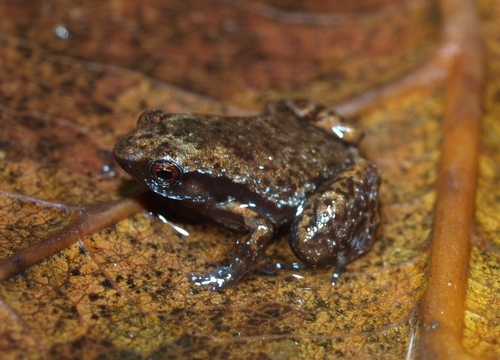
Rhombophryne diadema is a small terrestrial frog endemic to Madagascar, belonging to the family Microhylidae. This species is characterized by its distinctive diamond-shaped pattern and compact body structure typical of the genus Rhombophryne. The species inhabits the eastern rainforests of Madagascar, where it occupies leaf litter and low vegetation in primary forest environments.
Like many Malagasy amphibians, R. diadema has a highly restricted range and specific habitat requirements that make it particularly vulnerable to environmental changes. The primary threat to this species is habitat loss due to deforestation, agricultural expansion, and human settlement development throughout Madagascar's eastern forest corridor.
The conversion of primary forest to agricultural land, particularly for slash-and-burn agriculture, has resulted in significant fragmentation of suitable habitat. Climate change poses an additional threat, as altered precipitation patterns and temperature fluctuations can affect the microhabitat conditions essential for the species' survival and reproduction. The species' limited dispersal ability and specific ecological requirements further compound these threats.
Conservation efforts for R. diadema are primarily focused on habitat protection through the establishment and management of protected areas within its range. Research initiatives aimed at better understanding the species' ecology, population dynamics, and specific habitat requirements are ongoing.
Ex-situ conservation programs and captive breeding efforts may become necessary if population declines continue, though in-situ habitat conservation remains the priority approach for this critically endangered endemic species.
Rhombophryne diadema faces severe threats from deforestation and habitat destruction caused by agricultural expansion and human development in Madagascar's eastern forests. Climate change compounds these pressures by altering the specific microhabitat conditions this species requires for survival.
Habitat
This species inhabits the leaf litter and understory vegetation of primary rainforests in eastern Madagascar. It requires intact forest environments with stable moisture levels and appropriate microhabitat conditions.
Conservation measures underway
Other threatened species in MICROHYLIDAE
Threatened in Madagascar

Frequently asked questions
Why is Diadem Saw-browed Diamond Frog classified as Critically Endangered?
Where does Diadem Saw-browed Diamond Frog live?
What are the main threats to Diadem Saw-browed Diamond Frog?
Get weekly conservation intelligence
One short digest a week of the most striking species and country data we ship, plus breaking conservation news paired with our database where it matters.
Free, no spam. One-click unsubscribe in every email.