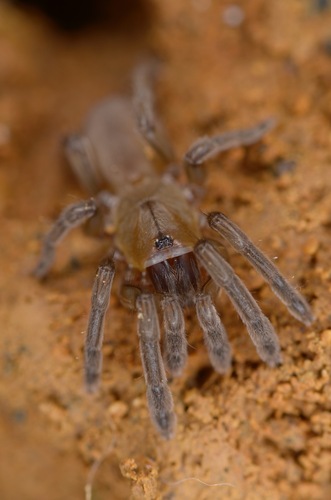
Idioctis intertidalis
Photo: Photo: (c) verneau, some rights reserved (CC BY-NC-ND), uploaded by verneau
Overview
Idioctis intertidalis is a critically endangered trapdoor spider endemic to Australia's southeastern coastline, representing one of the most habitat-specialized arachnids in the Barychelidae family. This robust, dark-bodied spider constructs distinctive silk-lined burrows in sandy substrates within the narrow intertidal zone, where it has evolved remarkable adaptations to survive regular saltwater inundation during high tides. Adults typically measure 15-25mm in body length, with females being notably larger and longer-lived than males.
The species exhibits a distinctive reddish-brown carapace with darker leg segments, and females possess particularly robust chelicerae adapted for excavating burrows in compacted coastal sediments. Idioctis intertidalis occupies an extremely restricted range along specific stretches of temperate Australian coastline, where suitable intertidal habitat provides the precise salinity and substrate conditions required for survival. The species demonstrates remarkable physiological tolerance to saltwater exposure, sealing its burrow entrance with a specialized trapdoor during tidal inundation.
Classified as Critically Endangered by the IUCN, this species faces severe population pressure from coastal development and sea-level rise. However, recent collaborative efforts between Australian researchers and coastal management authorities have identified several previously unknown populations, and targeted habitat restoration projects are showing promising results in stabilizing remaining coastal dune systems critical to the species' survival.
Idioctis intertidalis faces imminent extinction risk primarily from coastal development that destroys the narrow intertidal sandy habitats essential for burrow construction. Rising sea levels and increased storm intensity associated with climate change are altering the precise tidal dynamics this species requires, while coastal erosion eliminates suitable substrate faster than new habitat can form. Recreational beach activities, particularly off-road vehicle use and intensive foot traffic, directly crush burrows and compact sediments beyond the spider's ability to excavate.
Habitat
This species exclusively inhabits the upper intertidal zone of sandy beaches and coastal dunes along temperate Australian shorelines, where it constructs deep burrows in areas that experience regular but not continuous saltwater inundation. The habitat requires specific substrate composition of medium-grain sand with sufficient organic matter to support prey species, typically found 10-50 meters from the high tide line.
Other threatened species in BARYCHELIDAE
Threatened in Comoros

Frequently asked questions
Why is Idioctis intertidalis classified as Critically Endangered?
Where does Idioctis intertidalis live?
What are the main threats to Idioctis intertidalis?
Get weekly conservation intelligence
One short digest a week of the most striking species and country data we ship, plus breaking conservation news paired with our database where it matters.
Free, no spam. One-click unsubscribe in every email.