
Red-crowned Roofed Turtle
Batagur kachuga
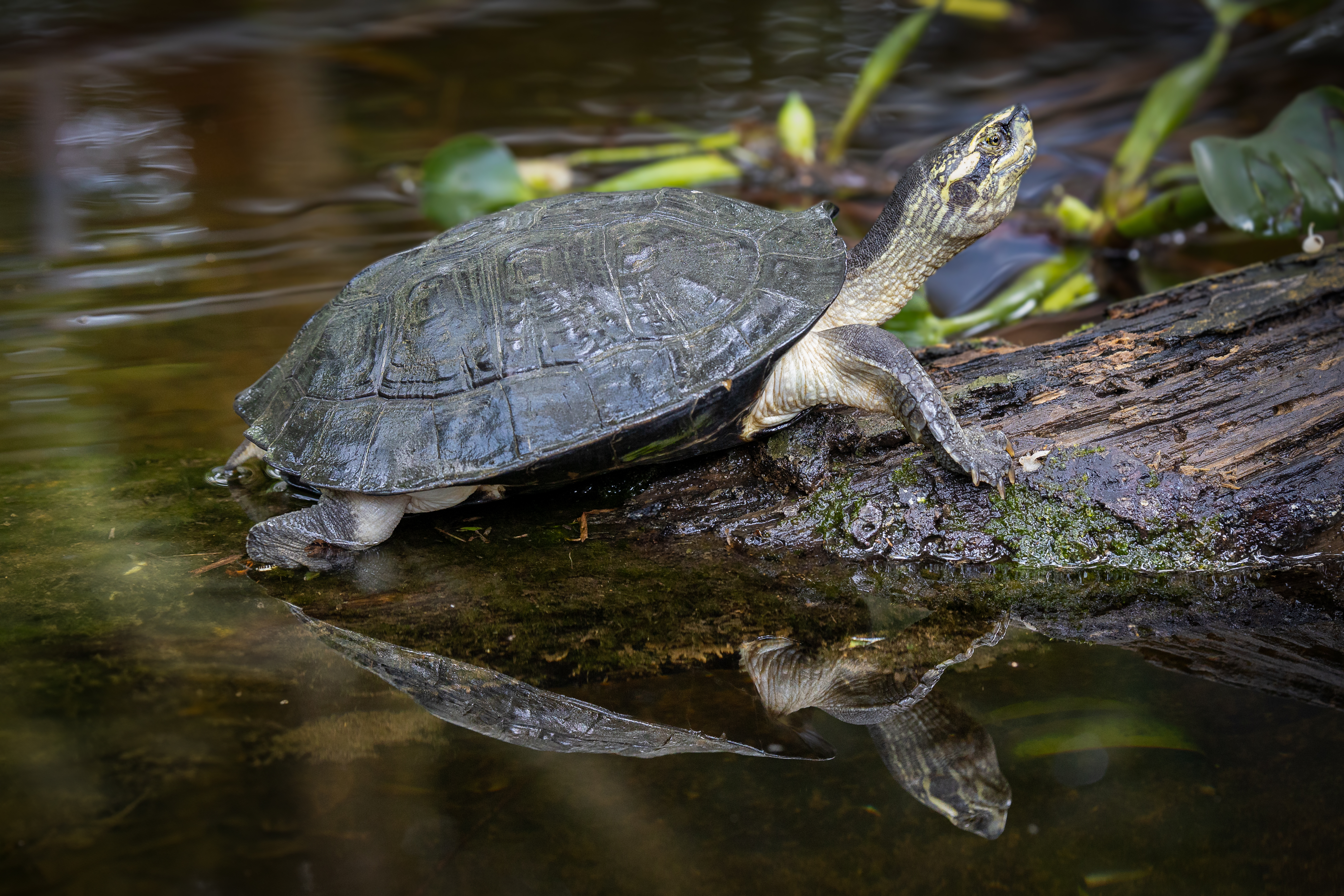
Photo: Wikimedia Commons (CC) via https://en.wikipedia.org/wiki/Red-crowned_roofed_turtle
Overview
The red-crowned roofed turtle is a large freshwater species distinguished by its distinctive high-domed carapace and the bright red or orange coloration that develops on the male's head and neck during breeding season. Adults can reach shell lengths of up to 56 centimeters, making them one of the larger Asian river turtles. These turtles are primarily herbivorous, feeding on aquatic vegetation, fruits, and leaves, though juveniles may consume some animal matter.
They play an important ecological role as seed dispersers and help maintain aquatic plant communities in river ecosystems.
This species inhabits large river systems across the Indian subcontinent, including the Ganges, Brahmaputra, and their tributaries in India, Bangladesh, Nepal, and Myanmar. They prefer deep, slow-moving waters with sandy or muddy bottoms and require sandy riverbanks for nesting.
The species faces severe threats from intensive hunting and trapping for meat, eggs, and traditional medicine. Pollution of river systems compounds these pressures, while habitat degradation from dam construction and river modification has fragmented populations. Egg collection from nesting beaches remains a significant problem throughout their range.
Conservation efforts include captive breeding programs in India and Nepal, with some facilities successfully hatching and releasing juveniles. Protected area designations cover portions of their habitat, and community-based conservation initiatives work to reduce egg harvesting in key nesting areas.
The species' outlook remains precarious despite conservation interventions. Population recovery is hampered by the turtles' slow maturation rate and continued anthropogenic pressures across their range.
The Red-crowned Roofed Turtle (Batagur kachuga) faces severe population decline primarily due to extensive egg collection for consumption and trade, along with habitat degradation from dam construction and river pollution. Adult turtles are also harvested for meat and traditional medicine, while nesting beaches are increasingly disturbed by human activities.
Habitat
Conservation measures underway
Other threatened species in GEOEMYDIDAE


Threatened in Bangladesh



Frequently asked questions
Why is Red-crowned Roofed Turtle classified as Critically Endangered?
Where does Red-crowned Roofed Turtle live?
What are the main threats to Red-crowned Roofed Turtle?
Get weekly conservation intelligence
One short digest a week of the most striking species and country data we ship, plus breaking conservation news paired with our database where it matters.
Free, no spam. One-click unsubscribe in every email.