Pruinose Dandelion
Taraxacum pruinatum
Overview
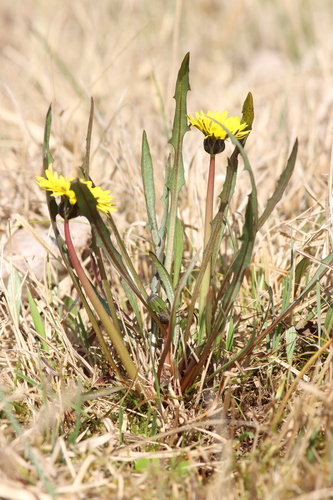
Taraxacum pruinatum is a perennial herbaceous plant in the dandelion genus, distinguished from common relatives by a distinctive pruinose (waxy, frosted) coating on its stems and leaves. Like other Taraxacum species, it produces a basal rosette of leaves and a single yellow composite flower head atop a hollow stalk, later forming a spherical seed head dispersed by wind. It contributes to local pollinator networks as an early-season nectar and pollen source and, like many dandelions, can reproduce both sexually and apomictically, allowing small populations to persist even under limited genetic exchange.
The species occurs across a scattered range spanning Australia, Denmark, the United Kingdom, Germany, Sweden, and Belgium, inhabiting terrestrial open ground such as grasslands, meadows, and other unforested habitats.
It is classified as Critically Endangered, with population trend unknown. Ongoing threats include habitat loss from agricultural conversion, urban and infrastructure development, and overgrazing by livestock, all of which degrade or eliminate the open habitats it depends on. Climate change and rising temperatures add further pressure by shifting suitable conditions beyond its current range.
Collection pressure for the horticultural trade compounds these losses by directly removing individuals from wild populations.
Conservation attention for this species remains limited compared to more prominent threatened flora, though its presence across multiple European countries and Australia suggests potential for coordinated monitoring and habitat protection efforts, including safeguarding remaining grassland fragments and regulating collection.
Given the combination of habitat degradation, climate pressure, and harvesting across its fragmented range, the species' outlook is precarious, and without targeted intervention and improved population monitoring, its conservation status is unlikely to improve in the near term.
The Pruinose Dandelion is losing its natural habitat as land is converted for farming and taken over by new buildings and roads, while livestock grazing too heavily on the land further damages its growing areas. It also faces pressure from people collecting it for the garden plant trade, and shifting weather patterns from a warming climate are adding further strain. All of these threats are currently ongoing and show no signs of letting up, suggesting the situation is likely to worsen over time.
Habitat
Alpine and subalpine meadows, rocky slopes, and grasslands typically between 1,500-3,000m elevation in mountainous regions. The species requires well-drained soils and cool, moist conditions characteristic of high-altitude environments.
Other threatened species in Asteraceae

Threatened in Australia
Frequently asked questions
Why is Pruinose Dandelion classified as Critically Endangered?
Where does Pruinose Dandelion live?
What are the main threats to Pruinose Dandelion?
Get weekly conservation intelligence
One short digest a week of the most striking species and country data we ship, plus breaking conservation news paired with our database where it matters.
Free, no spam. One-click unsubscribe in every email.