Indian Roofed Turtle
Pangshura tecta
Overview
Indian Roofed Turtle (Pangshura tecta)
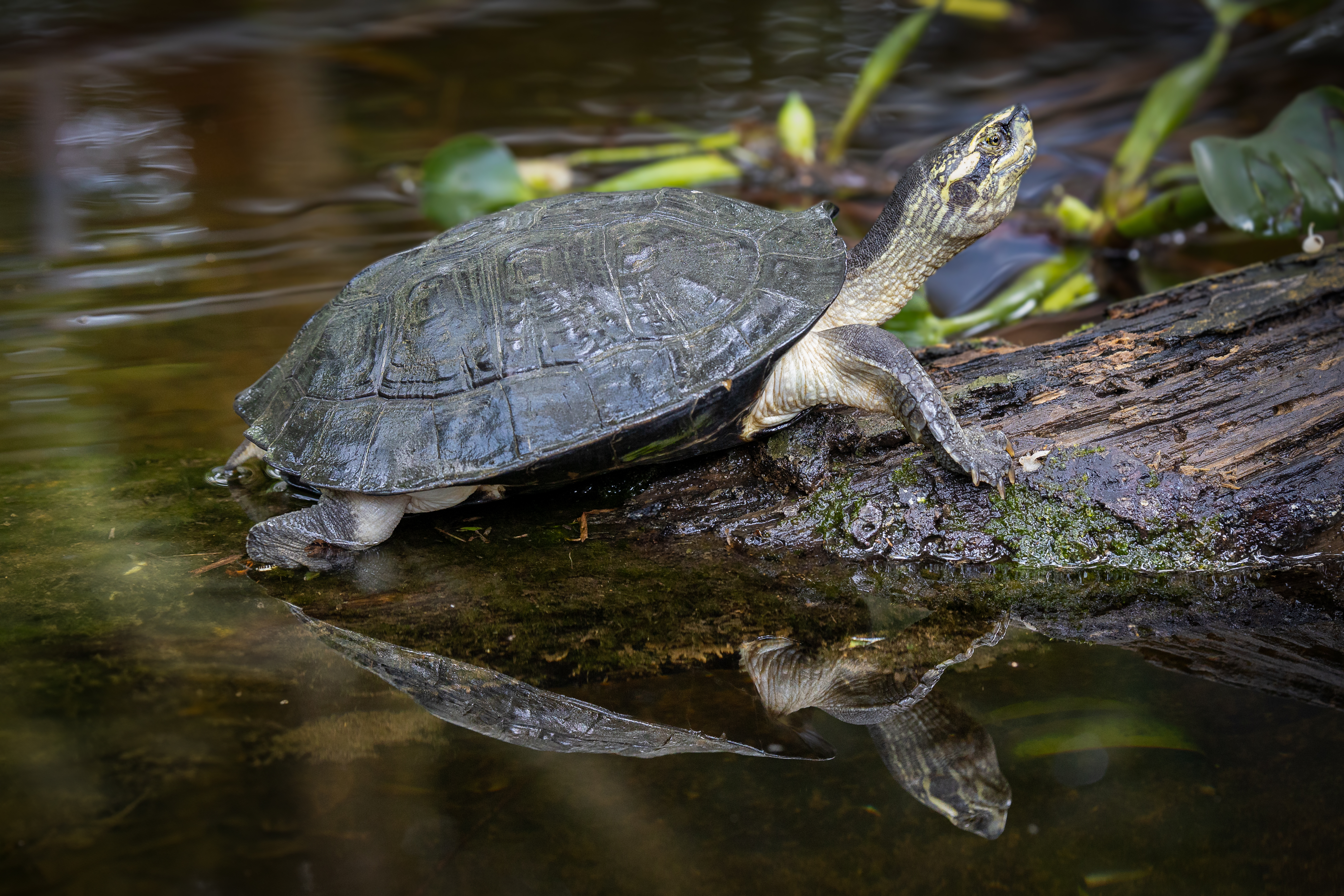
The Indian roofed turtle is a medium-sized freshwater turtle characterized by its distinctive high-domed carapace with a pronounced ridge running down the center, resembling a roof. Adults typically measure 15-23 cm in length, with females growing larger than males. The shell displays brown to olive coloration with yellow markings, while the head features yellow stripes.
These semi-aquatic turtles are omnivorous, feeding on aquatic vegetation, fish, insects, and carrion. They play important ecological roles as both predators and prey in freshwater ecosystems, helping maintain aquatic food web balance.
This species inhabits slow-moving rivers, ponds, lakes, and wetlands across the Indian subcontinent, including Bangladesh, India, Nepal, and Pakistan. They prefer shallow waters with muddy bottoms and abundant vegetation, often basking on logs or riverbanks during daylight hours.
The primary threat to Pangshura tecta is intensive hunting and trapping for human consumption and traditional medicine trade. Local communities harvest these turtles for food, while demand from traditional medicine markets drives commercial collection. Habitat degradation from agricultural expansion, pollution, and dam construction further compounds population pressures.
Conservation efforts include legal protection under national wildlife laws in range countries, though enforcement remains challenging. Several protected areas provide habitat security, and captive breeding programs have been established in India. Research initiatives are documenting population status and ecology to inform management strategies.
The species' population continues declining despite conservation measures. Without strengthened enforcement of hunting regulations and expanded habitat protection, the Indian roofed turtle faces continued population reduction throughout its range.
Pangshura tecta turtles face ongoing threats from people deliberately hunting and trapping them, both when they are in water and when they come onto land. This hunting and trapping continues to be an active problem affecting their populations. Based on the available information, these threats appear to be continuing at current levels rather than clearly increasing or decreasing.
Conservation measures underway
Other threatened species in GEOEMYDIDAE


Threatened in Bangladesh



Frequently asked questions
Why is Indian Roofed Turtle classified as Vulnerable?
Where does Indian Roofed Turtle live?
What are the main threats to Indian Roofed Turtle?
Get weekly conservation intelligence
One short digest a week of the most striking species and country data we ship, plus breaking conservation news paired with our database where it matters.
Free, no spam. One-click unsubscribe in every email.