Panaitoliko Greek Bush-cricket
Parnassiana panaetolikon
Overview
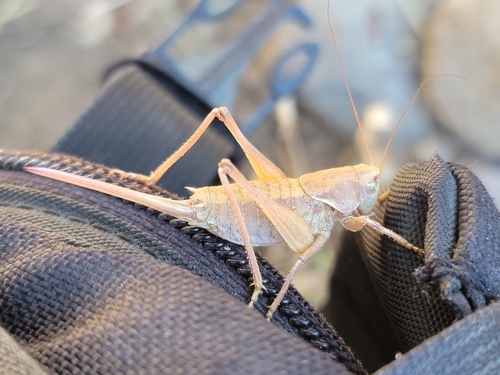
The Panaitoliko Greek bush-cricket (Parnassiana panaetolikon) is a flightless orthopteran endemic to a highly restricted mountainous area of central Greece, believed to be confined to the Panaitoliko massif and immediately surrounding montane habitat. Like other members of the genus Parnassiana, it is a robust, medium-sized bush-cricket adapted to rocky alpine and subalpine terrain, relying on herbaceous vegetation and scree-adjacent grasslands for feeding and shelter. Because it lacks functional wings, individuals cannot disperse beyond their native range, making the species entirely dependent on the ecological stability of a single mountain system.
The species is classified as Critically Endangered (CR) by the IUCN, reflecting its extremely limited extent of occurrence, fragmented habitat patches, and an inferred and ongoing decline in population size and habitat quality. Its narrow altitudinal range makes it acutely vulnerable to shifts in temperature and precipitation patterns, as well as to encroaching land-use change on the mountain's lower slopes. Livestock grazing intensity, changes in traditional pastoral practices, and small-scale infrastructure development in alpine zones pose additional pressure on the limited habitat available to this micro-endemic.
Conservation attention for the species remains minimal, but its recognition within Greece's broader Orthoptera conservation assessments has helped draw attention to the vulnerability of narrow-range Balkan invertebrates and the need for habitat protection at high elevations. Encouragingly, the mountain range it inhabits falls partly within areas subject to Greek national environmental oversight, offering a foundation for future targeted habitat safeguards. Continued taxonomic and ecological research, alongside site-specific protection measures, could meaningfully improve the species' long-term outlook.
Parnassiana panaetolikon faces severe threats from habitat destruction due to quarrying and mining activities in its limestone mountain habitat. The species' extremely restricted range makes it particularly vulnerable to local disturbances, while climate change poses additional risks through altered precipitation patterns affecting the cave and rock crevice environments it depends upon. Agricultural expansion and infrastructure development in the surrounding areas further fragment its already limited habitat.
Habitat
This critically endangered land snail is endemic to limestone karst formations in the mountains of central Greece, specifically inhabiting rock crevices, cave entrances, and areas with calcareous substrates. The species requires specific microhabitat conditions found in these limestone environments, including appropriate moisture levels and calcium-rich soils.
Conservation measures underway
Other threatened species in TETTIGONIIDAE
Threatened in Greece
Frequently asked questions
Why is Panaitoliko Greek Bush-cricket classified as Critically Endangered?
Where does Panaitoliko Greek Bush-cricket live?
What are the main threats to Panaitoliko Greek Bush-cricket?
Get weekly conservation intelligence
One short digest a week of the most striking species and country data we ship, plus breaking conservation news paired with our database where it matters.
Free, no spam. One-click unsubscribe in every email.