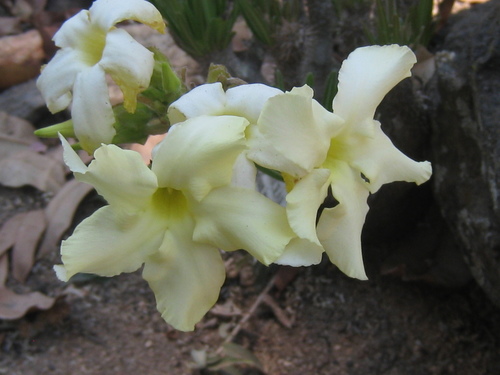
Pachypodium inopinatum
Photo: (c) Franck Rakotonasolo, some rights reserved (CC BY-NC), uploaded by Franck Rakotonasolo
Overview
Pachypodium inopinatum is a succulent shrub endemic to Madagascar, belonging to the family Apocynaceae. This distinctive pachypodium species is characterized by its thick, bottle-shaped trunk and sparse branching pattern, adapted to survive in arid conditions. The plant produces small white or cream-colored flowers and develops a swollen caudex that stores water during dry periods.
Endemic to specific regions of Madagascar, P. inopinatum occupies rocky outcrops and dry deciduous forest areas where it grows among limestone formations and exposed rock faces. The species has evolved specialized adaptations to its harsh environment, including thick waxy leaves that minimize water loss and a robust root system capable of anchoring in rocky substrates.
Like many Madagascar endemics, P. inopinatum faces severe threats from habitat destruction due to slash-and-burn agriculture, charcoal production, and expanding human settlements. The conversion of native dry forests to agricultural land has significantly reduced available habitat for this species.
Additionally, illegal collection for the international succulent trade poses a direct threat to wild populations. Climate change may further stress remaining populations by altering precipitation patterns in already marginal habitats. Conservation efforts for P.
inopinatum include protection within Madagascar's national park system and cultivation in botanical gardens worldwide to maintain genetic diversity. However, effective long-term conservation requires addressing the underlying socioeconomic factors driving habitat destruction while strengthening enforcement against illegal plant collection.
Pachypodium inopinatum faces severe habitat loss from slash-and-burn agriculture, charcoal production, and expanding human settlements across its native range in Madagascar. Illegal collection for the international succulent trade directly threatens wild populations. Climate change may further stress the species by altering precipitation patterns in its already marginal dry forest habitat.
Habitat
This species inhabits rocky outcrops and dry deciduous forest areas in Madagascar, typically growing among limestone formations and exposed rock faces. It is adapted to arid conditions with well-draining soils and seasonal rainfall patterns.
Conservation measures underway
Other threatened species in APOCYNACEAE
Threatened in Madagascar

Frequently asked questions
Why is Pachypodium inopinatum classified as Critically Endangered?
Where does Pachypodium inopinatum live?
What are the main threats to Pachypodium inopinatum?
Get weekly conservation intelligence
One short digest a week of the most striking species and country data we ship, plus breaking conservation news paired with our database where it matters.
Free, no spam. One-click unsubscribe in every email.