Orange Coral
Ramariopsis crocea
Overview
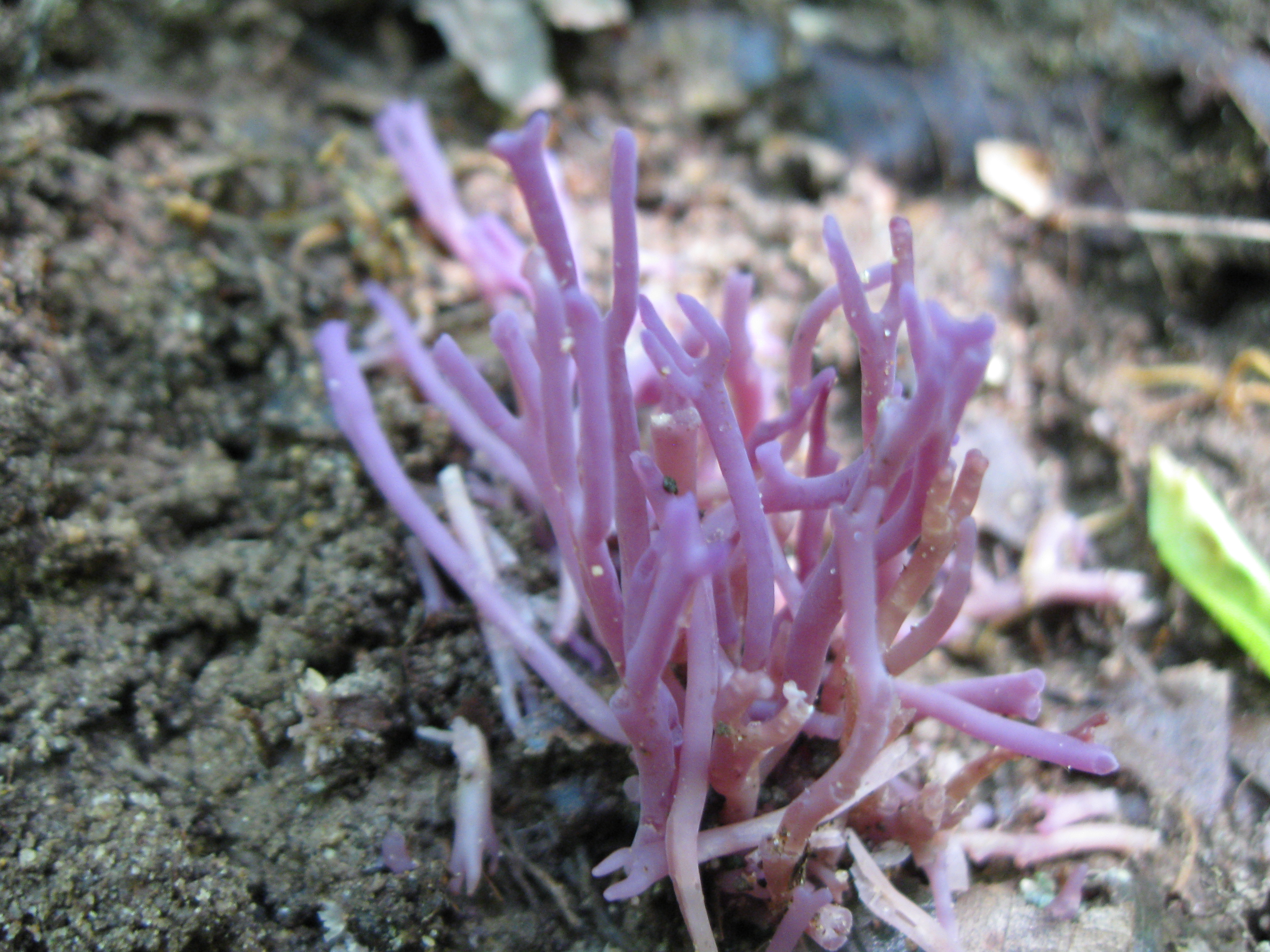
Ramariopsis crocea is a coral fungus in the family Clavariaceae, producing small, brightly colored, branching fruiting bodies that resemble miniature marine coral. Its erect, orange to yellow-orange branches rise from the forest floor, typically only a few centimeters tall. Like other members of its genus, it is thought to function as a saprotroph, decomposing organic matter in soil and leaf litter, or possibly forming mycorrhizal associations, contributing to nutrient cycling within forest ecosystems.
It fruits seasonally, often inconspicuously, and is more frequently detected through targeted surveys than casual observation.
The species has been recorded across a broad range of temperate and boreal regions, including Europe, North America, Asia, and parts of the Southern Hemisphere, spanning countries such as Sweden, Germany, Russia, the United States, Canada, Japan, China, New Zealand, and Brazil, among many others. It occurs in terrestrial habitats, generally associated with forested or semi-natural grassland environments where its substrate and microclimatic requirements are met.
The species is classified as Vulnerable, with threats arising primarily from habitat loss and fragmentation due to logging, which removes or alters the forest conditions it depends on. Climate change is affecting microhabitat temperature and moisture regimes, while agricultural runoff and atmospheric nitrogen deposition alter soil chemistry in ways that can disadvantage fungi adapted to nutrient-poor conditions. Recreational trampling in forested areas causes additional localized damage to fruiting bodies and mycelium.
Conservation measures include monitoring within protected areas and inclusion in regional red lists that inform land management decisions, though targeted species-specific action remains limited. Population trends are currently unknown due to insufficient long-term monitoring data. Given the ongoing nature of the threats identified, the species' outlook remains uncertain without improved habitat protection and monitoring.
Orange Coral is losing its home as forests are cut down for logging and disturbed by visitors walking through natural areas, while pollution from farm chemical runoff and airborne nitrogen is changing the soil and air conditions it depends on. On top of this, shifting weather patterns from climate change are altering the small, delicate habitat spaces this species needs to survive. All of these pressures are currently ongoing and show no signs of letting up, meaning the overall threat level is stable to worsening rather than improving.
Habitat
Orange Coral typically grows in deciduous and mixed woodlands, particularly favoring areas with rich, well-drained soils and moderate moisture levels. It forms small clusters on the forest floor among leaf litter and decaying organic matter, often in association with specific tree species.
Other threatened species in Clavariaceae

Threatened in Åland Islands


Frequently asked questions
Why is Orange Coral classified as Vulnerable?
Where does Orange Coral live?
What are the main threats to Orange Coral?
Get weekly conservation intelligence
One short digest a week of the most striking species and country data we ship, plus breaking conservation news paired with our database where it matters.
Free, no spam. One-click unsubscribe in every email.