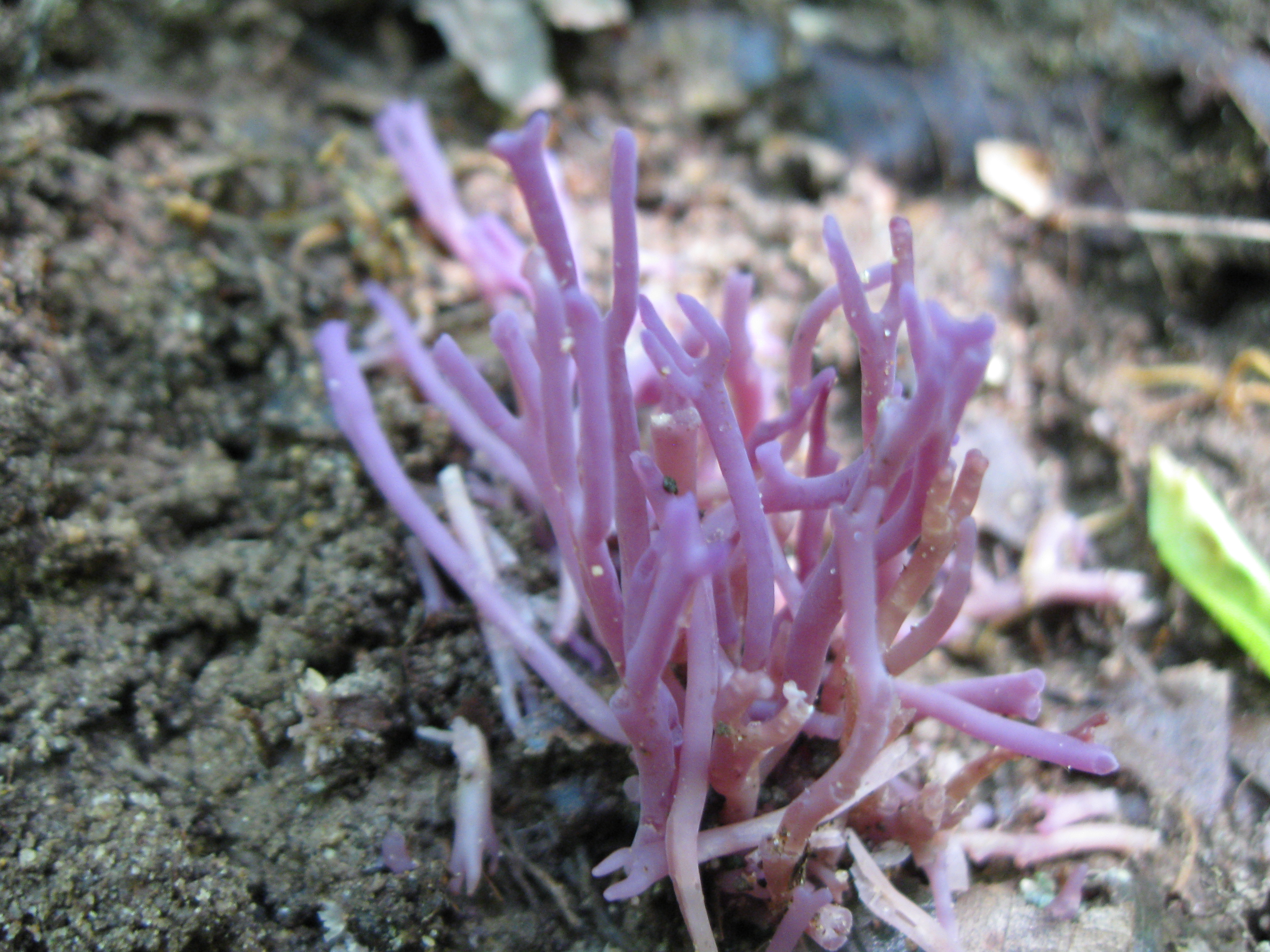
Lilac Coral
Ramariopsis pulchella
Photo: Wikimedia Commons (CC) via https://en.wikipedia.org/wiki/Ramariopsis_pulchella
Overview
Ramariopsis pulchella is a coral fungus, forming small, delicate, branching fruiting bodies that emerge from soil or leaf litter, typically displaying a pale lilac to violet coloration that fades with age. Like other members of the Clavariaceae, it functions primarily as a saprotroph or facultative mycorrhizal associate, breaking down organic matter or exchanging nutrients with plant roots, contributing to soil health and nutrient cycling within the ecosystems it inhabits. Its fruiting bodies appear seasonally, often in grassland or woodland settings with undisturbed soil layers, while the bulk of the organism persists underground as mycelium.
The species has a wide but scattered distribution, recorded across parts of Europe, North America, Oceania, Asia, and South and Central America, including countries such as the Netherlands, New Zealand, Australia, the United States, Japan, and Brazil. It is restricted to terrestrial habitats, generally favoring undisturbed forest floors and grasslands where fungal networks and soil structure remain intact.
The species is classified as Vulnerable, with threats including habitat loss from logging, disruption of mycelial networks through intensive forest management, altered microclimates linked to climate change, and soil chemistry changes caused by agricultural pollution. Population trends are currently unknown, reflecting limited long-term monitoring data typical for fungal species.
Conservation efforts remain largely indirect, relying on protected area designations, habitat preservation initiatives, and broader forest management reforms aimed at reducing soil disturbance. Increased fungal biodiversity surveys in several range countries are helping improve baseline data. Given ongoing habitat pressures and insufficient population monitoring, the species' long-term outlook remains uncertain, with continued research needed to clarify population trends and inform targeted conservation action.
Lilac Coral is losing its home as forests are cut down and broken up by logging, while changing weather patterns are shifting the cool, moist conditions it depends on. Chemical runoff from farming is altering the soil it grows in, and even well-meaning forest management activities can disturb the underground fungal networks it relies on to survive. These threats all appear to be ongoing and continuing at a steady pace rather than clearly increasing or decreasing.
Habitat
Ramariopsis pulchella typically grows in deciduous and mixed woodlands, particularly favoring areas with rich, well-drained soils and stable moisture levels. The species is often found among leaf litter and decaying organic matter in mature forest ecosystems where it forms important mycorrhizal associations.
Other threatened species in Clavariaceae

Threatened in Australia
Frequently asked questions
Why is Lilac Coral classified as Vulnerable?
Where does Lilac Coral live?
What are the main threats to Lilac Coral?
Get weekly conservation intelligence
One short digest a week of the most striking species and country data we ship, plus breaking conservation news paired with our database where it matters.
Free, no spam. One-click unsubscribe in every email.