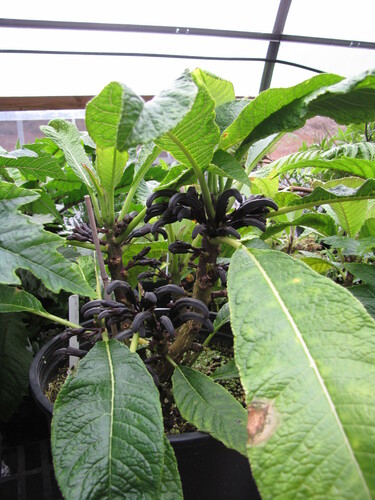
Cyanea gibsonii
Photo: Photo: (c) Forest and Kim Starr, some rights reserved (CC BY)
Overview
A detailed profile for this species is sourced from the IUCN Red List of Threatened Species as assessments become available.
Cyanea gibsonii, a Hawaiian lobeliad restricted to a handful of populations on Kauai, is critically endangered due to habitat degradation by feral pigs and goats that trample understory vegetation and disturb soil in its wet forest habitat. Invasive plants such as strawberry guava and Koster's curse outcompete this slow-growing shrub for light and nutrients in the fragmented forest remnants where it persists. Predation of seeds and seedlings by introduced rats further undermines natural regeneration, leaving the species dependent on very small, isolated subpopulations with limited genetic exchange.
Habitat
Cyanea gibsonii grows in the understory of wet and mesic montane forests on the island of Kauai, typically on steep slopes and stream banks at moderate elevations where native canopy cover persists.
Other threatened species in CAMPANULACEAE

Threatened in United States
Frequently asked questions
Why is Cyanea gibsonii classified as Critically Endangered?
Where does Cyanea gibsonii live?
What are the main threats to Cyanea gibsonii?
Get weekly conservation intelligence
One short digest a week of the most striking species and country data we ship, plus breaking conservation news paired with our database where it matters.
Free, no spam. One-click unsubscribe in every email.