
Oceanic Whitetip Shark
Carcharhinus longimanus
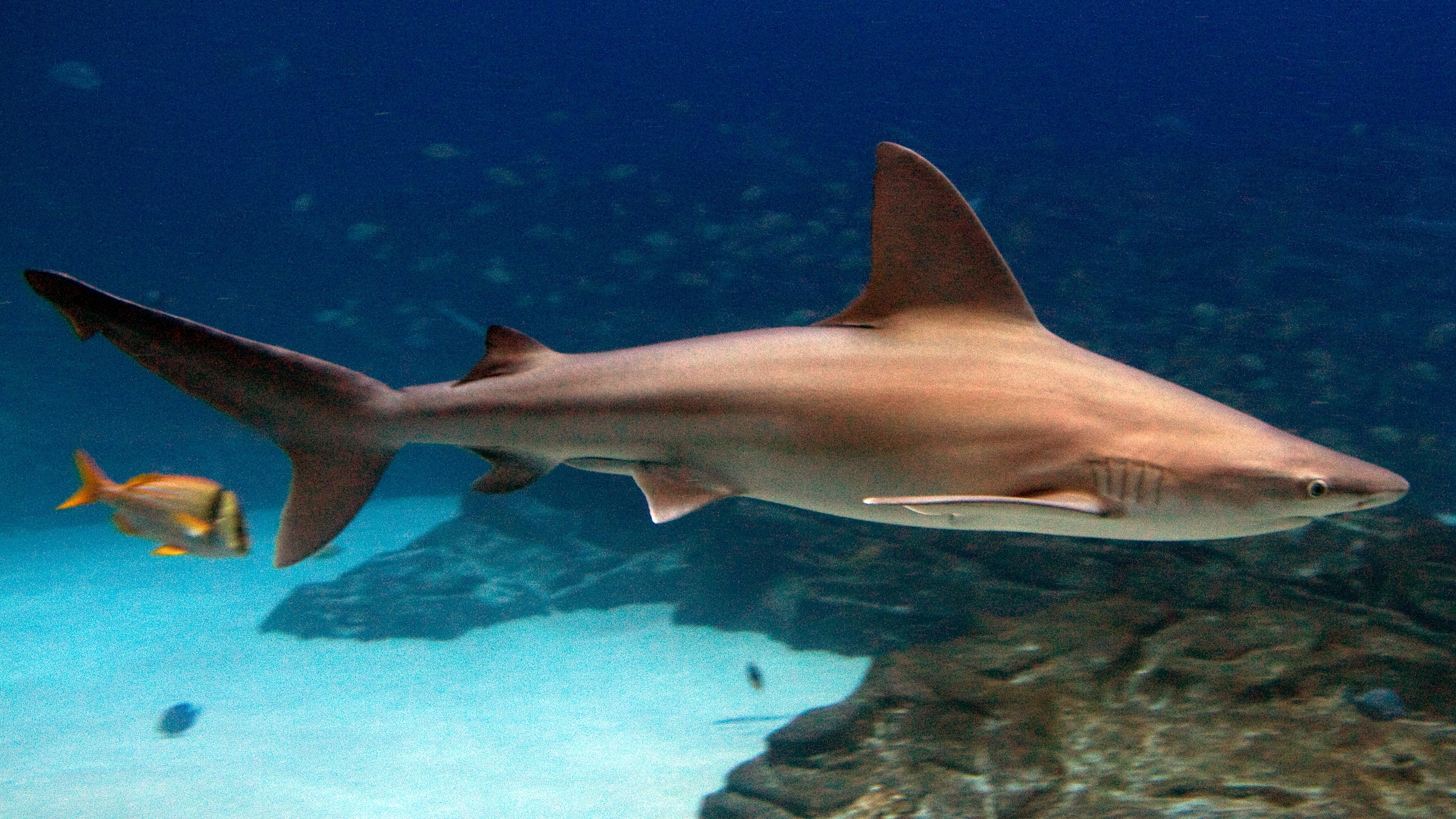
Photo: Wikimedia Commons (CC) via https://en.wikipedia.org/wiki/Oceanic_whitetip_shark
Overview
Recognizable by its long, rounded, white-tipped fins, Carcharhinus longimanus is a large pelagic shark that typically patrols the open ocean far from coastlines. It is an opportunistic predator, feeding on bony fishes, cephalopods, and occasionally scavenging around fishing vessels, and its slow, deliberate swimming behavior belies a reputation for boldness around potential food sources. As an apex and mesopredator in offshore ecosystems, it plays a role in regulating populations of prey species throughout its range.
This species has a circumtropical and subtropical distribution, occurring in oceanic and neritic marine waters across the Atlantic, Pacific, and Indian Oceans. It is recorded in the waters of well over eighty countries and territories, from the Bahamas and Brazil to Mozambique, the Seychelles, Australia, and the Philippines, generally favoring warm surface waters far from shore but sometimes venturing near islands and continental shelves.
Populations have declined sharply due to targeted harvesting for the international shark fin trade and extensive bycatch in commercial pelagic longline and purse-seine fisheries. Its naturally slow reproductive rate limits recovery even where fishing pressure decreases, and enforcement of catch regulations remains weak across much of the high seas. Shifting prey distributions linked to climate change add further pressure.
Conservation responses include international trade restrictions under CITES Appendix II, regional fisheries management measures prohibiting retention in some areas, and shark sanctuaries established by several coastal nations. Enforcement across international waters remains inconsistent, limiting overall effectiveness.
Classified as Critically Endangered with a decreasing population trend, the species continues to face high mortality from ongoing fishing activity, and current measures have not been sufficient to reverse the decline.
Oceanic whitetip sharks are mainly threatened by commercial fishing, where they get caught accidentally on long fishing lines meant for other species, as well as being deliberately hunted for their fins to supply the shark fin trade. These pressures are made worse because the sharks reproduce slowly, so their populations struggle to bounce back, and weak enforcement of fishing rules in international waters allows overfishing to continue largely unchecked. Overall, these threats appear to be ongoing and stable rather than clearly increasing or decreasing, though the combination of slow recovery and continued fishing pressure keeps the species at serious risk.
Habitat
The oceanic whitetip shark inhabits warm, tropical and subtropical open ocean waters worldwide, typically found in the epipelagic zone from the surface to depths of 200 meters. This highly migratory species prefers deep blue waters far from shore, often associated with floating debris or following ships, and is commonly found in areas with water temperatures above 18°C.
Conservation measures underway
Other threatened species in CARCHARHINIDAE

Threatened in Angola




Frequently asked questions
Why is Oceanic Whitetip Shark classified as Critically Endangered?
Where does Oceanic Whitetip Shark live?
What are the main threats to Oceanic Whitetip Shark?
Get weekly conservation intelligence
One short digest a week of the most striking species and country data we ship, plus breaking conservation news paired with our database where it matters.
Free, no spam. One-click unsubscribe in every email.