Nymphargus mixomaculatus
Overview
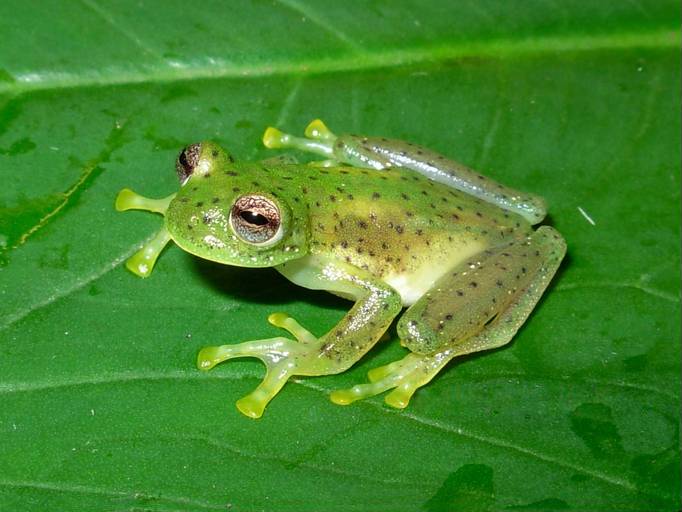
Nymphargus mixomaculatus is a glassfrog species belonging to the family Centrolenidae, a group known for their translucent ventral skin through which internal organs are sometimes visible. Like other members of its genus, it is a small, slender frog adapted to life along montane streams, typically pale to lime green in coloration with distinctive mottled patterning that gives the species its name. It is found in a restricted range within the tropical Andes, a region recognized globally as a biodiversity hotspot but also one experiencing rapid ecological change.
Glassfrogs in this genus depend on clean, flowing freshwater systems bordered by intact forest vegetation, where males typically call from leaves overhanging streams and females deposit egg clutches on foliage above the water. Nymphargus mixomaculatus is currently classified as Critically Endangered (CR) by the IUCN, reflecting an extremely restricted geographic distribution, a high degree of habitat specialization, and ongoing pressures from deforestation and stream degradation within its range. Amphibians in this family are also highly sensitive to shifts in microclimate and water quality, making them early indicators of ecosystem stress in Andean cloud forest habitats.
Population trend data remain unknown, underscoring the need for sustained field monitoring to clarify the species' current status. On a more encouraging note, increased taxonomic and survey attention to small-range Nymphargus species in recent years has improved detection efforts and highlighted the importance of protecting remaining forest fragments and stream corridors where such species persist. Continued collaboration between regional herpetological researchers and conservation organizations offers a meaningful opportunity to secure protected status for key watersheds before further decline occurs.
Nymphargus mixomaculatus faces severe threats from habitat destruction due to deforestation, agricultural expansion, and urban development within its limited range in the Andean cloud forests. The species is particularly vulnerable to climate change impacts that alter the delicate moisture and temperature conditions of its high-altitude habitat, while pollution from agricultural runoff and mining activities degrades the pristine stream environments essential for its reproduction.
Habitat
This glass frog inhabits pristine cloud forests and montane rainforests along streams and rivers at elevations between 1,500-2,500 meters in the Andean mountains. It requires areas with dense vegetation cover, high humidity, and clean flowing water for breeding, typically found near waterfalls and rocky stream sections with overhanging vegetation.
Conservation measures underway
Other threatened species in CENTROLENIDAE
Threatened in Peru
Frequently asked questions
Why is Nymphargus mixomaculatus classified as Critically Endangered?
Where does Nymphargus mixomaculatus live?
What are the main threats to Nymphargus mixomaculatus?
Get weekly conservation intelligence
One short digest a week of the most striking species and country data we ship, plus breaking conservation news paired with our database where it matters.
Free, no spam. One-click unsubscribe in every email.