Neosilurus mollespiculum
Overview
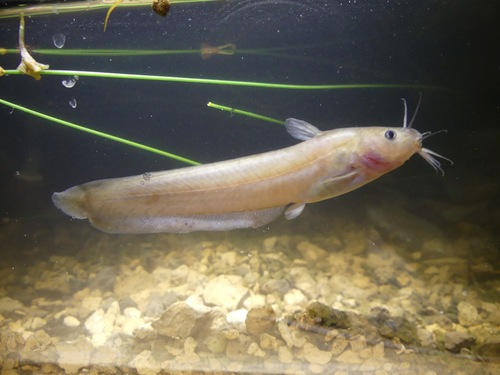
This eel-tailed catfish is a member of the family Plotosidae, characterized by an elongated, scaleless body, a single long dorsal-to-caudal fin fringe, and barbels around the mouth used to detect prey along riverbeds. Like other Neosilurus species, it is likely nocturnal, foraging on benthic invertebrates, small fish, and organic detritus, and plays a role in nutrient cycling and as a prey item for larger aquatic predators and birds within freshwater food webs.
The species is restricted to Australia, where it inhabits permanent rivers and streams, associated inland wetlands, and rocky substrate areas. These habitats provide the stable flow conditions and structural complexity the species appears to depend on for shelter and feeding.
The population is classified as Vulnerable and is in decline, driven primarily by two ongoing pressures. Dams and water management infrastructure alter natural flow regimes, fragment river systems, and degrade the permanent flowing-water habitats this species relies on. Concurrently, invasive non-native species introduce competition, predation pressure, and potential disease transmission, compounding stress on existing populations.
Specific targeted conservation programs for this species are not well documented, but it likely benefits indirectly from broader Australian freshwater conservation efforts, including river flow management policies, wetland protection under national environmental legislation, and invasive species control programs targeting introduced fish and other aquatic pests in Australian river systems.
Given the continuation of both major threats without species-specific intervention, the outlook remains concerning. Continued habitat fragmentation from water infrastructure combined with unresolved invasive species pressures suggest the declining population trend is likely to persist unless targeted management or habitat restoration measures are implemented.
This species is threatened by dams and water management activities that alter the natural flow and structure of its river habitat, as well as by invasive non-native species that compete with or prey on it. Both of these threats are currently ongoing and actively affecting the species.
Habitat
Conservation measures underway
Other threatened species in PLOTOSIDAE
Threatened in Australia
Frequently asked questions
Why is Neosilurus mollespiculum classified as Vulnerable?
Where does Neosilurus mollespiculum live?
What are the main threats to Neosilurus mollespiculum?
Get weekly conservation intelligence
One short digest a week of the most striking species and country data we ship, plus breaking conservation news paired with our database where it matters.
Free, no spam. One-click unsubscribe in every email.