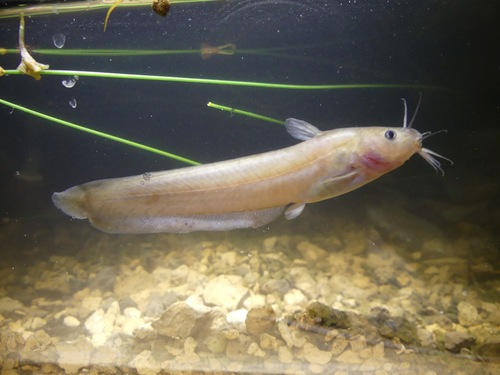
Dalhousie Catfish
Neosilurus gloveri
Photo: Photo: (c) Ollie Scully, some rights reserved (CC BY-NC), uploaded by Ollie Scully
Overview
This slender, eel-like catfish belongs to the family Plotosidae, characterized by a scaleless, elongated body, a rounded caudal fin merging with the dorsal and anal fins, and barbels around the mouth used to detect prey in murky water. Like other members of its genus, it is likely nocturnal and bottom-dwelling, feeding on invertebrates and small aquatic organisms, and plays a role in freshwater food webs as both predator and prey.
The species is restricted to Australia, associated with freshwater systems including inland wetlands such as bogs, marshes, swamps and fens, as well as desert-associated water bodies. This suggests reliance on isolated springs or waterholes in arid or semi-arid landscapes, habitats often characterized by naturally limited and fluctuating water availability.
The species faces multiple ongoing pressures. Livestock farming and ranching contribute to habitat degradation through trampling and water contamination, while agricultural expansion into non-timber croplands alters surrounding landscapes. Dams and water management practices affect natural flow and water table dynamics critical to isolated wetland habitats.
Fire and altered fire regimes, invasive species, recreational activities, and broader habitat shifting compound these pressures, particularly given the limited and fragmented nature of suitable freshwater habitat in desert environments.
Conservation measures specific to this species are not well documented, though its listing as Critically Endangered under the IUCN Red List indicates recognition of its precarious status, likely prompting monitoring and habitat protection considerations within Australian freshwater conservation frameworks.
Given the declining population trend and the range of ongoing, unmitigated threats affecting its restricted and fragile habitat, the species' outlook remains poor without targeted intervention to protect remaining freshwater refuges and manage water resources sustainably.
The Dalhousie Catfish faces pressure from farming and livestock grazing near its water sources, along with changes to water flow caused by dams and water management. It also faces risks from invasive species, human recreational activities around its habitat, and shifting habitat conditions, including impacts from fire and land use for crops. These threats are currently ongoing and appear stable, without clear signs of rapid escalation.
Habitat
Conservation measures underway
Other threatened species in PLOTOSIDAE
Threatened in Australia
Frequently asked questions
Why is Dalhousie Catfish classified as Critically Endangered?
Where does Dalhousie Catfish live?
What are the main threats to Dalhousie Catfish?
Get weekly conservation intelligence
One short digest a week of the most striking species and country data we ship, plus breaking conservation news paired with our database where it matters.
Free, no spam. One-click unsubscribe in every email.