
Narrow-leaved Helleborine
Cephalanthera longifolia
Photo: Wikimedia Commons (CC) via https://en.wikipedia.org/wiki/Cephalanthera_longifolia
Overview
Narrow-leaved Helleborine (Cephalanthera longifolia)
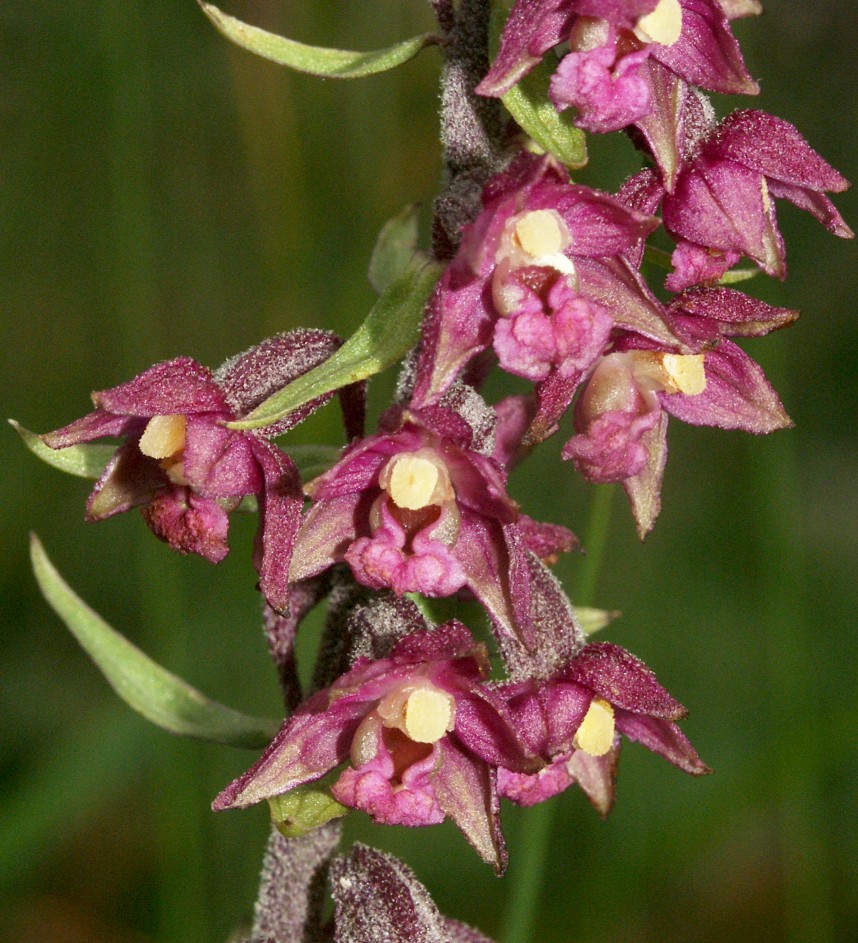
The Narrow-leaved Helleborine is a terrestrial orchid characterized by its distinctive lance-shaped leaves and white, tubular flowers that rarely open fully. Growing 20-60 cm tall, this perennial herb produces 8-20 flowers arranged in a loose spike during late spring to early summer. Unlike many orchids, it relies primarily on self-pollination, though occasional insect visits do occur.
The species plays a specialized ecological role, forming mycorrhizal relationships with soil fungi that are essential for its survival and nutrient acquisition.
This orchid demonstrates remarkable geographic distribution, spanning from Western Europe through Asia to parts of North America and extending into tropical regions including the Caribbean and Southeast Asia. It typically inhabits deciduous and mixed woodlands, favoring calcareous soils in shaded to semi-shaded locations. The species shows particular preference for beech and oak forests with well-drained, alkaline substrates.
The primary threats to Narrow-leaved Helleborine include habitat fragmentation through deforestation and urban development, changes in forest management practices that alter light conditions, and soil disturbance that disrupts crucial fungal partnerships. Climate change poses additional challenges by shifting suitable habitat zones and affecting the delicate timing of its reproductive cycle.
Conservation efforts focus on habitat protection within existing forest reserves and implementation of sympathetic woodland management practices. Several European countries have established monitoring programs to track population dynamics, while botanical gardens maintain ex-situ collections for research purposes.
The species' current outlook remains uncertain due to insufficient population data across its extensive range, though localized declines have been documented in several European regions.
The Narrow-leaved Helleborine faces severe population declines primarily due to habitat destruction and fragmentation of its specialized woodland environments. Agricultural intensification, urban development, and changes in forest management practices have significantly reduced suitable habitat availability. Climate change and altered precipitation patterns further threaten the delicate ecological balance required for this orchid's survival.
Other threatened species in Orchidaceae
Threatened in Afghanistan

Frequently asked questions
Why is Narrow-leaved Helleborine classified as Endangered?
Where does Narrow-leaved Helleborine live?
What are the main threats to Narrow-leaved Helleborine?
Get weekly conservation intelligence
One short digest a week of the most striking species and country data we ship, plus breaking conservation news paired with our database where it matters.
Free, no spam. One-click unsubscribe in every email.