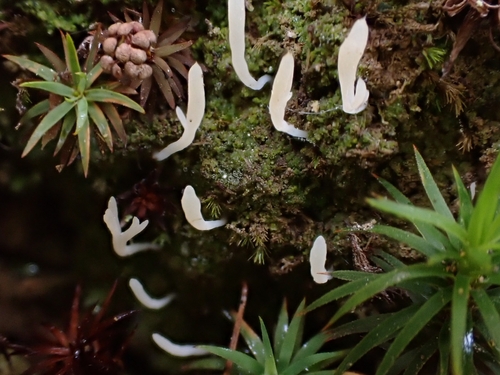
club lichen
Multiclavula coronilla
Photo: (c) Ken Kellman, some rights reserved (CC BY-NC), uploaded by Ken Kellman
Overview
The club lichen (Multiclavula coronilla) is a small, coral-like lichenised fungus belonging to a distinctive genus that bridges the gap between basidiomycete fungi and photosynthetic algal partners. Unlike more familiar crustose or foliose lichens, Multiclavula species produce tiny, upright, club-shaped or branched fruiting structures that emerge from a thin algal crust growing directly on substrate, giving the species a miniature coral-like appearance when viewed closely. It typically grows on damp, exposed mineral soil, decaying wood, or disturbed ground in humid microhabitats, often in areas with low competition from vascular plants.
Multiclavula coronilla is classified as Critically Endangered (CR) by the IUCN, reflecting an extremely restricted known distribution, a small number of documented occurrences, and ongoing vulnerability to habitat disturbance. Because basidiolichens like this one depend on a stable interface between fungal and algal partners within narrow microhabitat conditions, even localized changes in moisture, soil disturbance, or canopy cover can disrupt the delicate balance required for the lichen to persist. Its specialized ecology and inconspicuous size also mean it is easily overlooked, likely contributing to its sparse documentation and the difficulty of assessing true population trends, which remain unknown.
On a positive note, growing interest in basidiolichen taxonomy and targeted mycological surveys in recent years has improved detection methods and raised awareness of this understudied lichen group, offering hope that additional populations may be identified and incorporated into conservation planning. Protecting known microhabitats from soil compaction, logging, and substrate disturbance, alongside continued taxonomic and distributional research, represents a practical and achievable step toward securing this species' long-term survival.
Multiclavula coronilla faces severe threats from habitat destruction and degradation of its specialized moss and bryophyte substrates in temperate and boreal forest ecosystems. Climate change poses additional risks by altering moisture regimes and temperature conditions essential for both the fungus and its bryophyte hosts. The species' highly specific ecological requirements and limited distribution make it extremely vulnerable to environmental changes.
Habitat
Multiclavula coronilla occurs in moist temperate and boreal forests where it grows as a parasite or associate on mosses and other bryophytes. The species requires specific microhabitat conditions with consistent moisture levels and is typically found in undisturbed forest environments with well-developed bryophyte communities.
Other threatened species in Hydnaceae



Frequently asked questions
Why is club lichen classified as Critically Endangered?
Where does club lichen live?
What are the main threats to club lichen?
Get weekly conservation intelligence
One short digest a week of the most striking species and country data we ship, plus breaking conservation news paired with our database where it matters.
Free, no spam. One-click unsubscribe in every email.