Indian Eyed Turtle
Morenia petersi
Overview
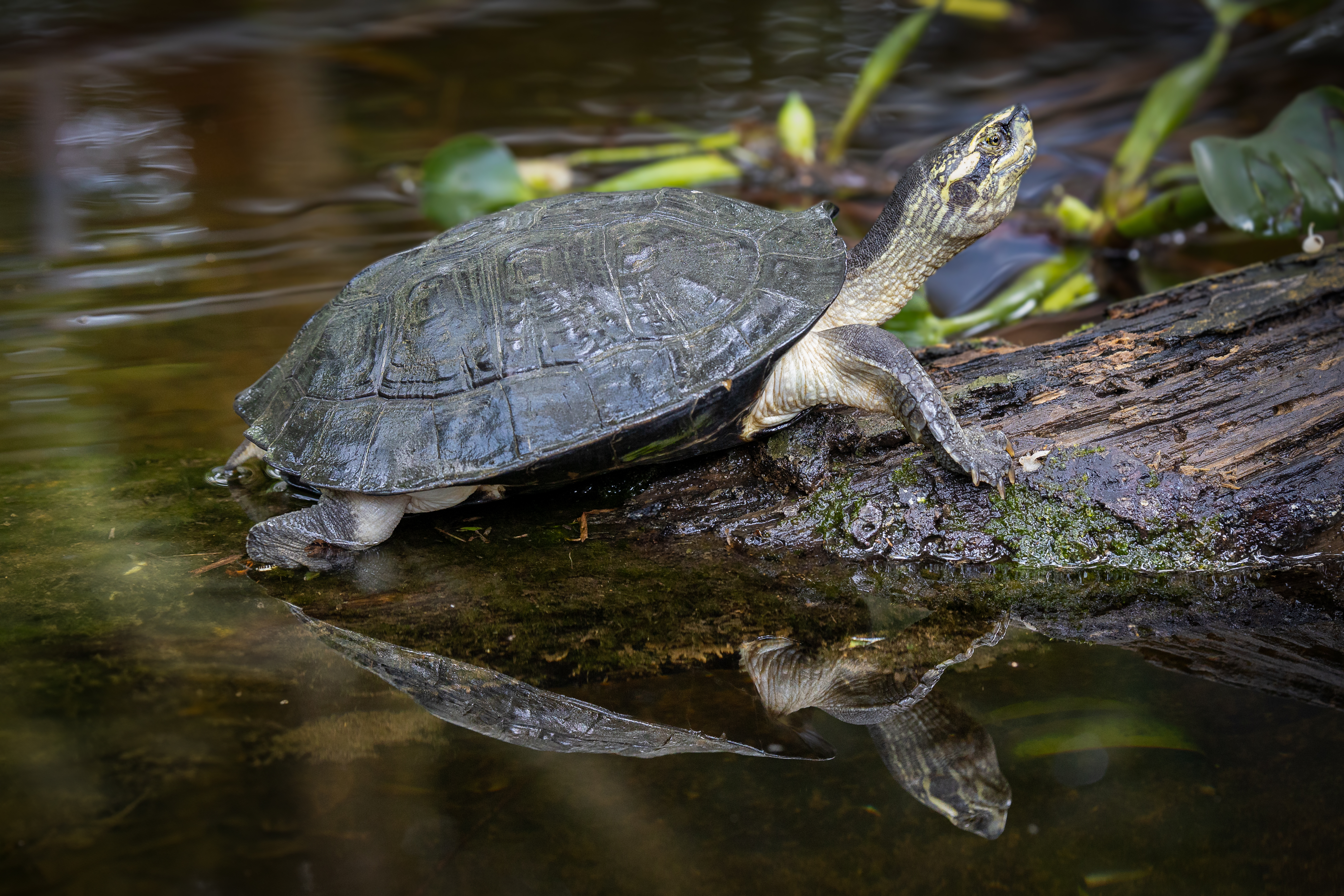
Species Overview Morenia petersi, commonly known as the Indian Eyed Turtle, is a medium-sized freshwater turtle characterized by distinctive eye-like markings on its carapace. This semi-aquatic species exhibits typical freshwater turtle behavior, spending time both in water and basking on logs or riverbanks. As an omnivore, it plays an important ecological role in aquatic ecosystems by controlling invertebrate populations and dispersing seeds through its varied diet of aquatic plants, insects, and small fish.
Geographic Range and Habitat The Indian Eyed Turtle has a limited distribution across parts of Bangladesh, India, and Nepal, primarily inhabiting slow-moving rivers, streams, ponds, and wetlands in lowland areas. The species prefers freshwater habitats with abundant vegetation and suitable basking sites.
Threats Multiple ongoing threats contribute to the species' endangered status and declining population trend. Water management infrastructure, particularly dams, disrupts natural river systems essential for the turtle's lifecycle. Water quality degradation from domestic wastewater and agricultural runoff compromises habitat conditions.
The species faces significant pressure from intentional hunting and trapping for local consumption and trade. Habitat destruction through agricultural expansion and logging activities further reduces available suitable environments.
Conservation Status Current conservation measures for Morenia petersi remain limited, with most protection efforts occurring through general freshwater habitat conservation programs rather than species-specific initiatives. The combination of multiple persistent threats and restricted geographic range suggests continued population decline without enhanced conservation intervention. The species' trajectory remains concerning given the ongoing nature of identified threats across its range.
Morenia petersi faces threats from water pollution caused by sewage, farm runoff, and industrial waste, as well as dams that alter their water habitats. The species is also harmed by people hunting and trapping them, along with logging and farming activities that destroy their natural environment. All of these threats are currently ongoing, suggesting the pressures on this species remain stable or may be intensifying.
Conservation measures underway
Other threatened species in GEOEMYDIDAE


Threatened in Bangladesh



Frequently asked questions
Why is Indian Eyed Turtle classified as Endangered?
Where does Indian Eyed Turtle live?
What are the main threats to Indian Eyed Turtle?
Get weekly conservation intelligence
One short digest a week of the most striking species and country data we ship, plus breaking conservation news paired with our database where it matters.
Free, no spam. One-click unsubscribe in every email.