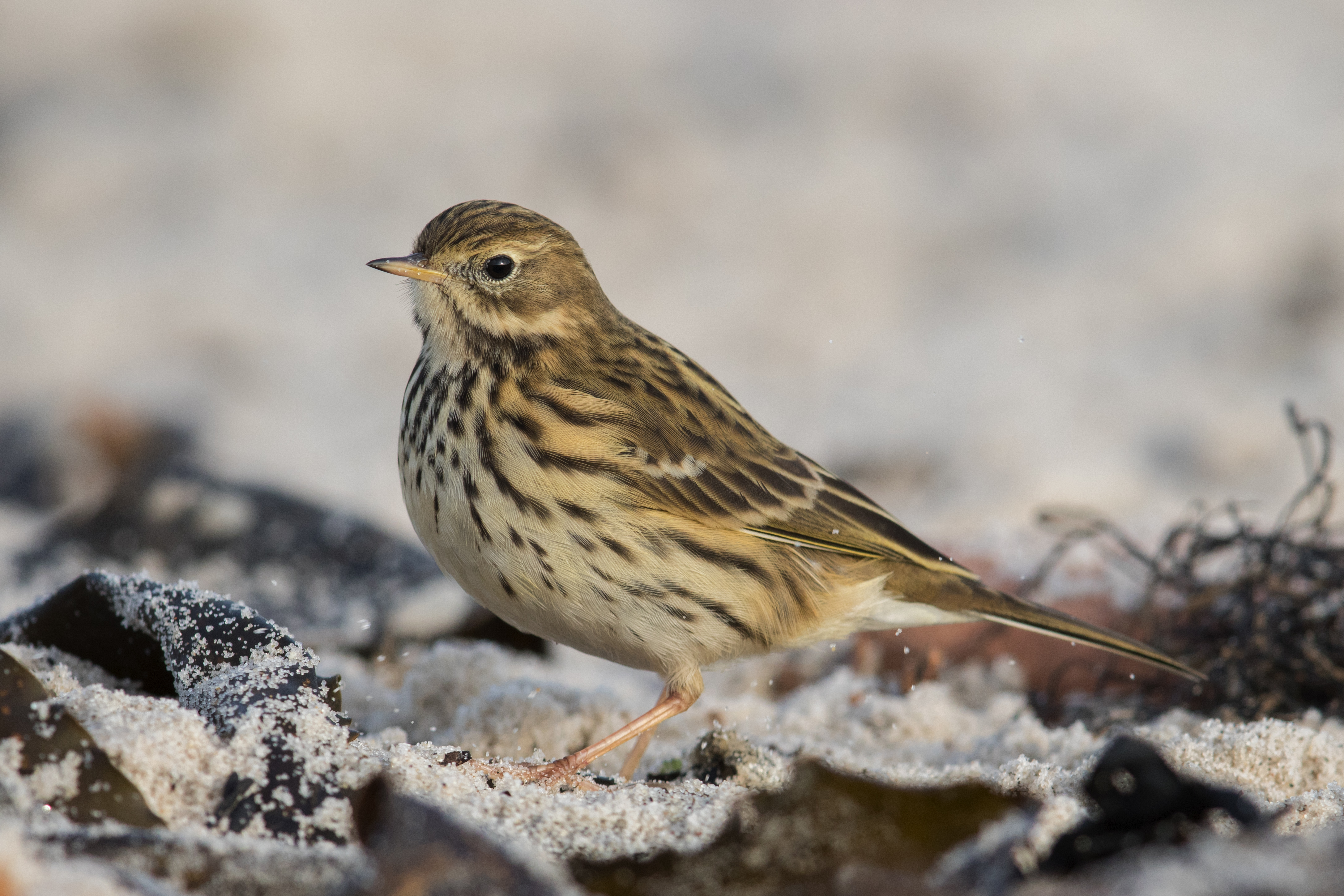
MEPI
Anthus pratensis
Photo: Wikimedia Commons (CC) via https://en.wikipedia.org/wiki/Meadow_pipit
Overview
A detailed profile for this species is sourced from the IUCN Red List of Threatened Species as assessments become available.
The meadow pipit has experienced severe population declines across its European range, with losses exceeding 50% in many countries since the 1980s. Agricultural intensification has eliminated traditional mixed farming systems that provided optimal breeding habitat, while increased pesticide use has reduced the invertebrate prey essential for feeding chicks. Climate change is shifting suitable habitat northward and upward in elevation, compressing the species' available range.
Habitat
Meadow pipits inhabit open grasslands, moorlands, rough pastures, and upland areas with short to medium-height vegetation. They prefer traditional extensively managed agricultural landscapes with mixed grazing and hay meadows that provide both nesting sites and abundant invertebrate food sources.
Other threatened species in Motacillidae


Frequently asked questions
Why is MEPI classified as Endangered?
Where does MEPI live?
What are the main threats to MEPI?
Get weekly conservation intelligence
One short digest a week of the most striking species and country data we ship, plus breaking conservation news paired with our database where it matters.
Free, no spam. One-click unsubscribe in every email.