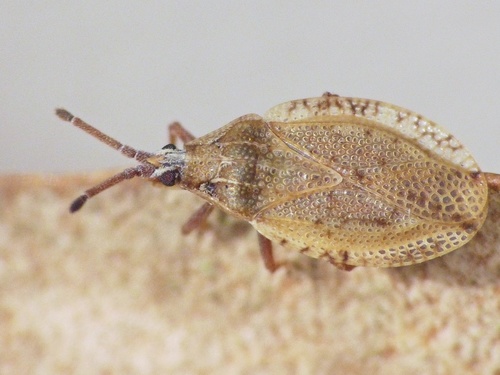
Galeatus spinifrons
Overview
A detailed profile for this species is sourced from the IUCN Red List of Threatened Species as assessments become available.
Galeatus spinifrons faces significant pressure from agricultural expansion and intensive farming practices that fragment and degrade its specialized habitat requirements. Urban development and infrastructure projects continue to reduce available nesting sites, while pesticide use in surrounding agricultural areas may impact prey availability and reproductive success.
Habitat
This species inhabits semi-arid scrublands and open woodlands with scattered vegetation, typically favoring areas with thorny shrubs and sparse canopy cover. It shows preference for edge habitats between agricultural lands and natural vegetation where insect prey is abundant.
Other threatened species in Tingidae

Threatened in Austria
Frequently asked questions
Why is Galeatus spinifrons classified as Vulnerable?
Where does Galeatus spinifrons live?
What are the main threats to Galeatus spinifrons?
Get weekly conservation intelligence
One short digest a week of the most striking species and country data we ship, plus breaking conservation news paired with our database where it matters.
Free, no spam. One-click unsubscribe in every email.