Livistona
Livistona nasmophila
Overview
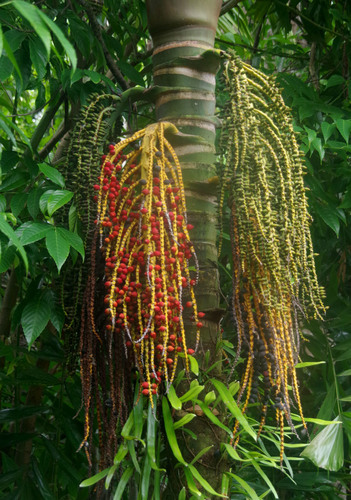
This solitary fan palm is a member of the family Arecaceae, distinguished by a single upright stem topped with a crown of large, costapalmate leaves that fold in a fan-like arrangement. Like other Livistona species, it is likely long-lived and slow-growing, with inflorescences that emerge among the leaf bases and produce small fruits favored by birds and other wildlife, which likely contribute to seed dispersal across its range. The species plays a structural role in its habitat, offering shelter and microhabitat niches within otherwise sparse, exposed terrain.
Livistona nasmophila is restricted to Australia, where it occupies rocky habitats. Its distribution appears to be naturally limited, with populations persisting in specific rocky outcrops or gorge systems that provide localized moisture retention and protection from surrounding arid conditions.
The species is classified as Vulnerable, primarily due to ongoing drought conditions. As a palm reliant on consistent moisture access, even in rocky habitats where water can collect in crevices or seep from underlying rock, prolonged dry periods threaten seedling establishment and the long-term health of mature individuals. Because populations are confined to specific rocky formations, the species has limited capacity to shift its range in response to changing water availability, increasing its vulnerability to climatic variability.
Population trends for this species are currently unknown, making it difficult to assess whether numbers are stable, declining, or fluctuating in response to drought cycles. Conservation attention has focused on monitoring populations within its rocky habitat range, though specific large-scale intervention programs are not well documented. The species' future outlook depends significantly on regional rainfall patterns and the frequency and severity of future droughts, both of which are difficult to predict with certainty given current data limitations.
Livistona nasmophila is primarily threatened by ongoing drought conditions, which reduce the water availability these palms need to survive, particularly since they often grow in specific water-dependent habitats like desert oases or spring-fed sites. Prolonged dry periods can weaken the trees, prevent successful reproduction, and shrink the already limited habitat suitable for this species. This threat is ongoing and shows no signs of easing.
Habitat
Other threatened species in ARECACEAE
Threatened in Australia
Frequently asked questions
Why is Livistona classified as Vulnerable?
Where does Livistona live?
What are the main threats to Livistona?
Get weekly conservation intelligence
One short digest a week of the most striking species and country data we ship, plus breaking conservation news paired with our database where it matters.
Free, no spam. One-click unsubscribe in every email.