Great Desert Skink
Liopholis kintorei
Overview
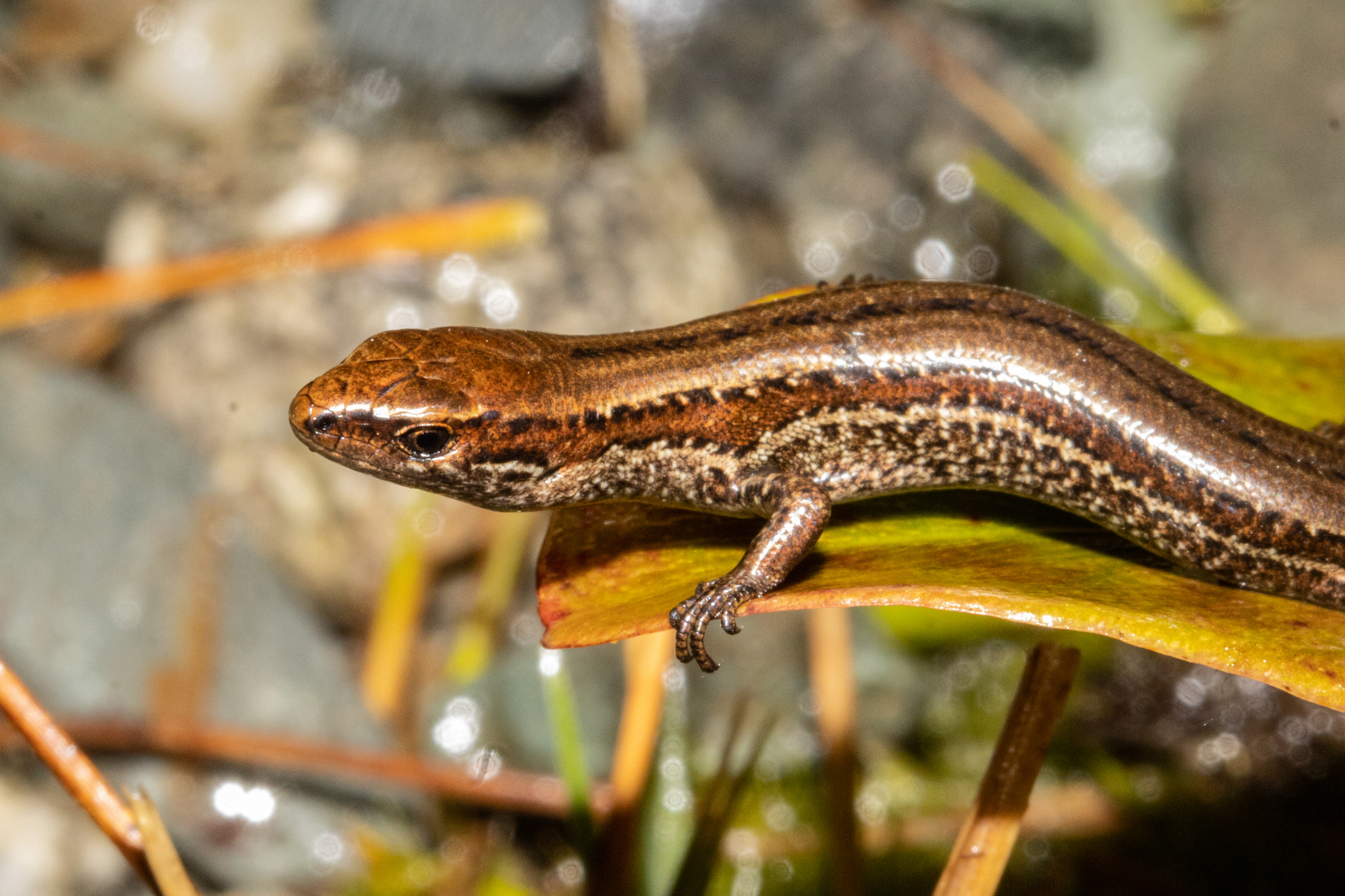
This medium-sized burrowing skink is one of Australia's most social reptile species, living in extended family groups within complex burrow systems that can persist across generations. Adults reach up to around 40 centimetres in total length and display a robust build with smooth scales in shades of brown to reddish-tan, providing camouflage against arid substrates. Individuals cooperate in burrow maintenance and defense, with juveniles often remaining with parents for extended periods, a rare trait among lizards.
As both predator of invertebrates and prey for larger reptiles, birds, and mammals, the species plays a role in the arid ecosystem's food web, while its burrows provide microhabitat for other desert-dwelling animals.
The Great Desert Skink is found in central Australia, occupying arid and semi-arid habitats spanning desert, shrubland, and open forest across parts of the Northern Territory, Western Australia, and South Australia.
Population decline stems from several converging pressures. Predation by feral cats, an invasive species, has significantly affected recruitment and adult survival. Altered fire regimes, including both frequent burning and fire suppression, have degraded the spinifex-dominated habitat the species depends upon for shelter and foraging.
Mining and quarrying activity, along with tourism and recreational land use, contribute to habitat disturbance and fragmentation across its range.
Conservation efforts include monitoring programs run in partnership with Indigenous ranger groups, feral predator control initiatives, and traditional fire management practices aimed at restoring more natural burning patterns. Some populations occur within protected areas and Indigenous Protected Areas, offering a degree of habitat security.
Despite these measures, the population trend remains decreasing, and the species is currently classified as Vulnerable, reflecting ongoing and largely unresolved threats across its range.
The Great Desert Skink faces ongoing pressure from land disturbance caused by tourism, recreational activities, and mining operations, all of which can damage its burrow systems and desert habitat. Fire and altered fire patterns further threaten the species, along with predation and competition from invasive animals. Based on the ongoing nature of all listed threats, the overall threat level appears to be stable rather than clearly increasing or decreasing.
Habitat
Conservation measures underway
Other threatened species in SCINCIDAE

Threatened in Australia
Frequently asked questions
Why is Great Desert Skink classified as Vulnerable?
Where does Great Desert Skink live?
What are the main threats to Great Desert Skink?
Get weekly conservation intelligence
One short digest a week of the most striking species and country data we ship, plus breaking conservation news paired with our database where it matters.
Free, no spam. One-click unsubscribe in every email.