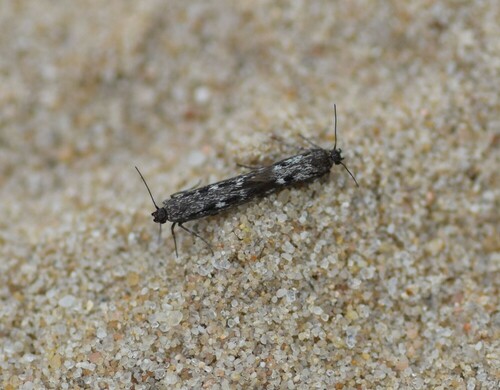
Ling Owlet
Scythris empetrella
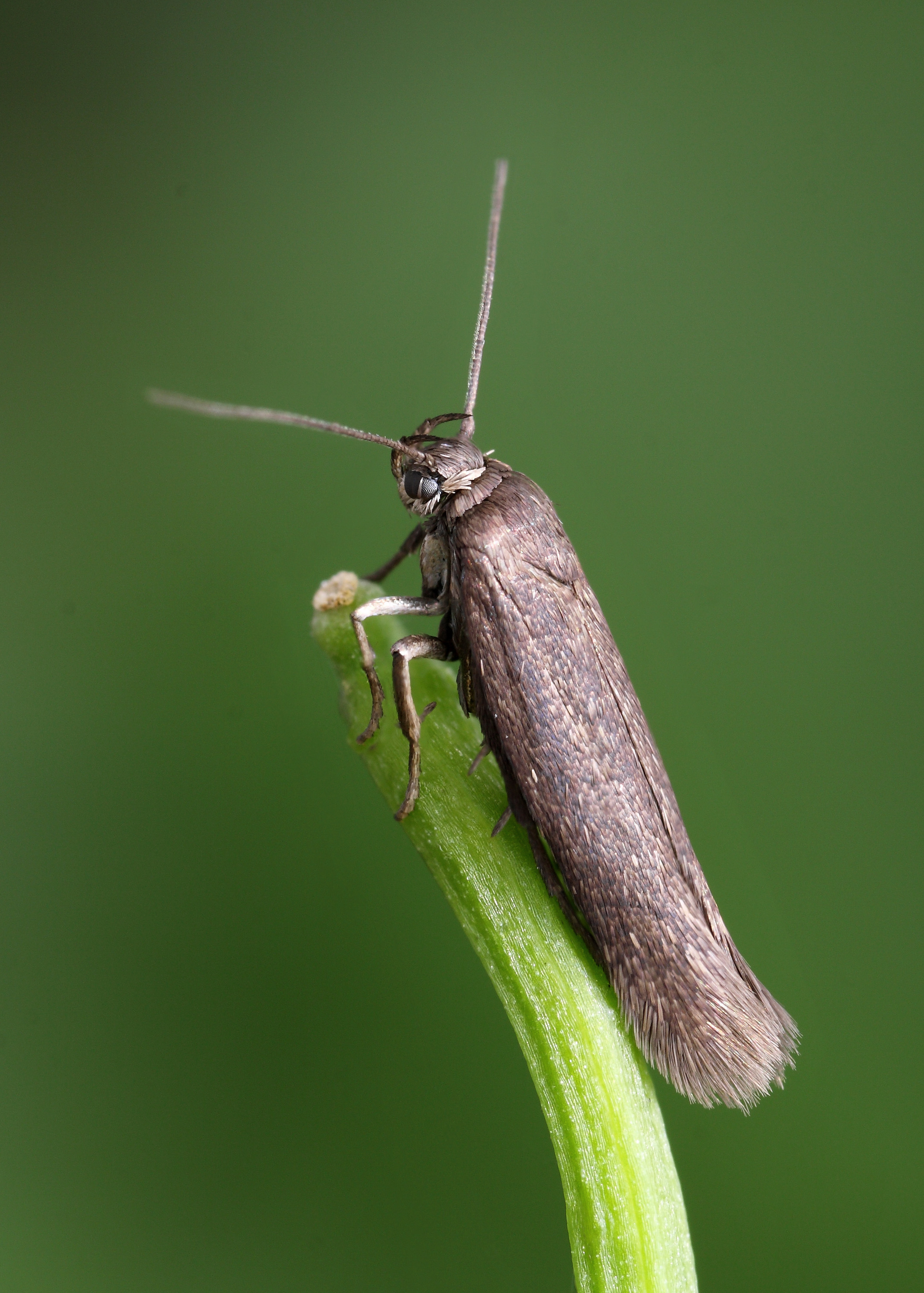
Photo: Photo: (c) pascallosekoot, some rights reserved (CC BY-NC)
Overview
Scythris empetrella is a moth of the family Scythrididae described by Ole Karsholt and Ebbe Nielsen in 1976 and found in Europe.
The Ling Owlet faces severe population declines due to habitat loss from deforestation and agricultural expansion across its limited range. Climate change is altering the specific microhabitat conditions this specialized moth requires, while light pollution disrupts its nocturnal behavior patterns and reproductive cycles.
Habitat
Inhabits heathlands, moorlands, and bog margins where crowberry (Empetrum) grows, typically in northern European montane and subarctic environments. This specialized moth is closely associated with Empetrum-dominated plant communities in acidic, nutrient-poor soils at elevations ranging from sea level to montane zones.
Other threatened species in Scythrididae

Threatened in Åland Islands


Frequently asked questions
Why is Ling Owlet classified as Critically Endangered?
Where does Ling Owlet live?
What are the main threats to Ling Owlet?
Get weekly conservation intelligence
One short digest a week of the most striking species and country data we ship, plus breaking conservation news paired with our database where it matters.
Free, no spam. One-click unsubscribe in every email.