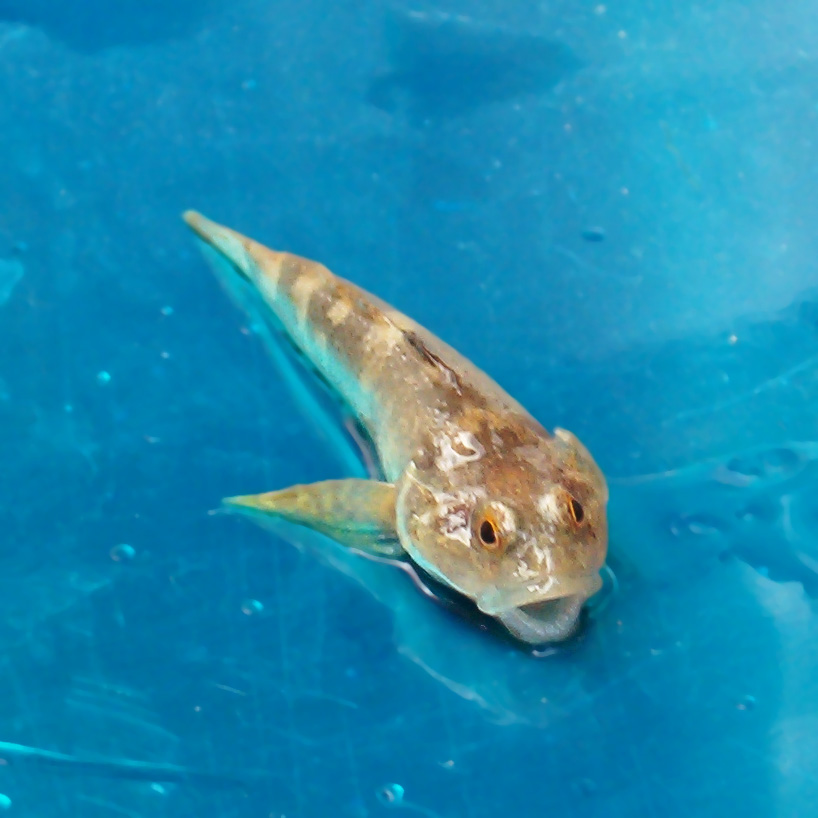
Lez Sculpin
Cottus petiti
Photo: Wikimedia Commons (CC) via https://en.wikipedia.org/wiki/Cottus_petiti
Overview
Cottus petiti, also called the chabot du Lez in French, is a species of freshwater ray-finned fish belonging to the family Cottidae, the typical sculpins. It is endemic to France, found only in a small 3 km stretch of the river Lez in Southern France near Montpellier. The natural habitat is fed by karstic springs which may have enabled the isolated survival of the population through geological history.
Now the species may be threatened by habitat loss. The males of this species are typically 56 mm (2.2 in) in length. This species was confirmed as a separate species from the European bullhead in 2005 by Jörg Freyhof, Maurice Kottelat and Arne W.
Nolte.
Cottus petiti faces severe threats from habitat degradation and water quality deterioration in its limited freshwater range. Dam construction and water diversions have fragmented populations and altered natural flow regimes essential for spawning. Agricultural runoff and urban pollution have degraded water quality, while invasive species compete for resources and prey on juveniles.
Habitat
Cottus petiti inhabits cool, clear freshwater streams and rivers with rocky substrates and moderate to fast-flowing water. The species requires well-oxygenated waters with gravel beds for spawning and rocky crevices for shelter.
Conservation measures underway
Other threatened species in COTTIDAE
Threatened in France
Frequently asked questions
Why is Lez Sculpin classified as Critically Endangered?
Where does Lez Sculpin live?
What are the main threats to Lez Sculpin?
Get weekly conservation intelligence
One short digest a week of the most striking species and country data we ship, plus breaking conservation news paired with our database where it matters.
Free, no spam. One-click unsubscribe in every email.