
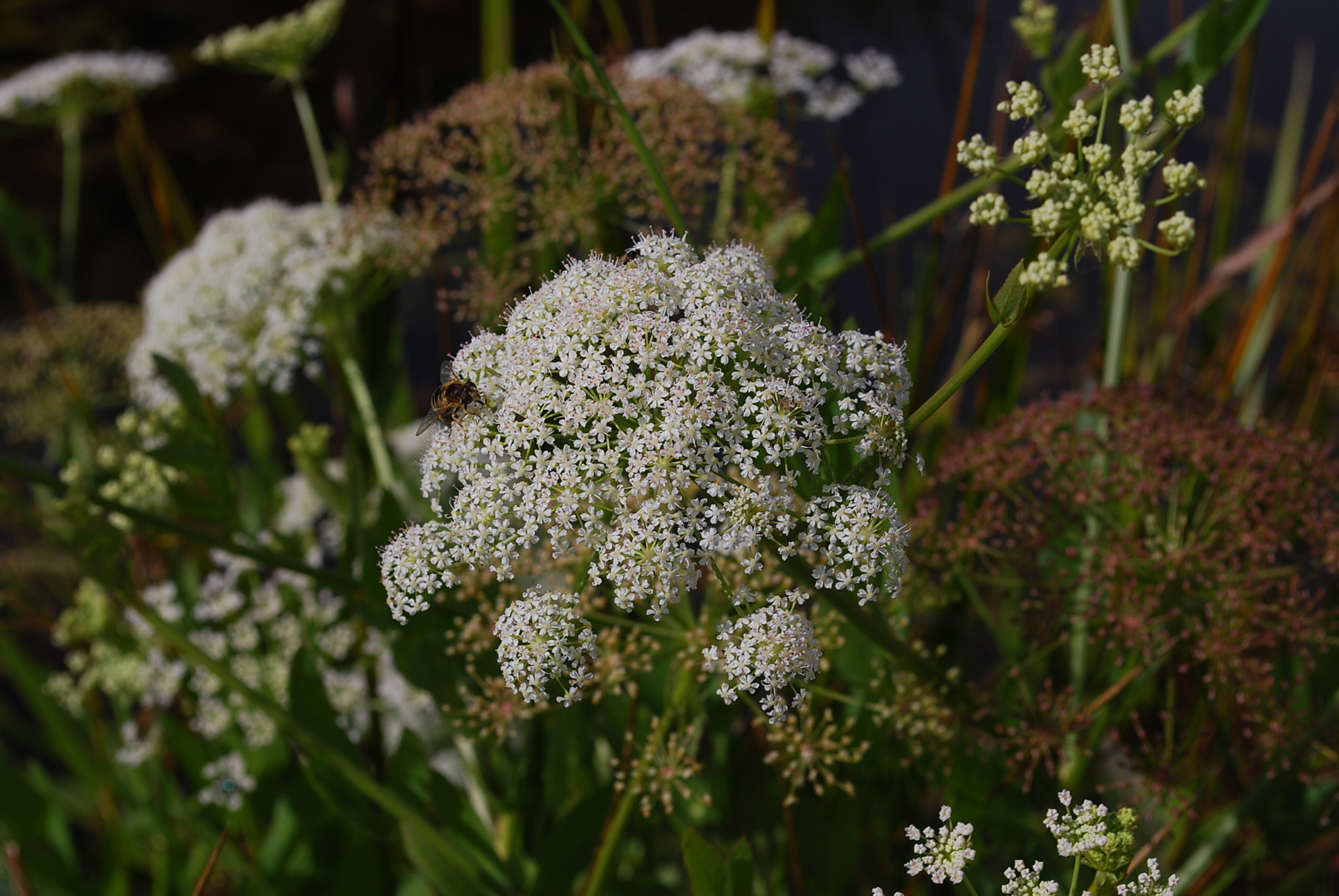
Lesser Water-parsnip
Berula erecta
Photo: Wikimedia Commons (CC) via https://en.wikipedia.org/wiki/Berula_erecta
Overview
Berula erecta is a perennial aquatic plant in the carrot family, characterized by hollow, creeping stems that root at the nodes and pinnate leaves divided into toothed leaflets. It produces small white flowers arranged in compound umbels during summer months. The species grows partially submerged in shallow water, forming dense stands that provide shelter and habitat structure for invertebrates, amphibians, and small fish, while also contributing to nutrient cycling and bank stabilization in the waterways it inhabits.
This species occupies a broad range across Europe, parts of Asia, Africa, and has been recorded in North America and other regions, typically found in slow-moving streams, ditches, springs, and other freshwater margins with clean, calcareous water. Despite its wide distribution, populations are patchy and dependent on specific water quality and flow conditions.
Its vulnerable status stems from ongoing wetland drainage for agricultural expansion, which eliminates suitable habitat, and water pollution from agricultural runoff, which degrades the clean-water conditions the species requires. Urban development continues to fragment remaining populations, while shifting water levels linked to climate change alter the hydrological regimes the plant depends on. Competition from invasive plant species further reduces its ability to persist in disturbed habitats.
Conservation responses include protection of wetland and freshwater habitats under regional and national environmental regulations, water quality monitoring programs, and habitat restoration projects targeting streams and spring-fed systems in parts of its European range. No population-specific numerical estimates are currently available.
Given the continued pressures from land-use change, pollution, and climate-driven hydrological shifts, the species' long-term trajectory remains uncertain, with localized declines likely unless habitat and water quality protections are strengthened.
Lesser Water-parsnip is losing its wetland homes as they are drained for farming, developed for towns and cities, or invaded by competing plants, while the water that remains is often polluted by farm runoff. Climate change is adding further pressure by changing water levels in the streams and wetlands the plant depends on. Since all of these threats are currently ongoing and acting together, the overall pressure on this species appears to be intensifying.
Habitat
Lesser Water-parsnip inhabits shallow, slow-flowing or still freshwater environments including ditches, streams, ponds, and marsh edges. It requires clean water with muddy or sandy substrates and typically grows in water depths of 10-50 centimeters.
Other threatened species in Apiaceae
Threatened in Afghanistan

Frequently asked questions
Why is Lesser Water-parsnip classified as Vulnerable?
Where does Lesser Water-parsnip live?
What are the main threats to Lesser Water-parsnip?
Get weekly conservation intelligence
One short digest a week of the most striking species and country data we ship, plus breaking conservation news paired with our database where it matters.
Free, no spam. One-click unsubscribe in every email.