ENEndangered

kornfiltlav

Parmeliella testacea

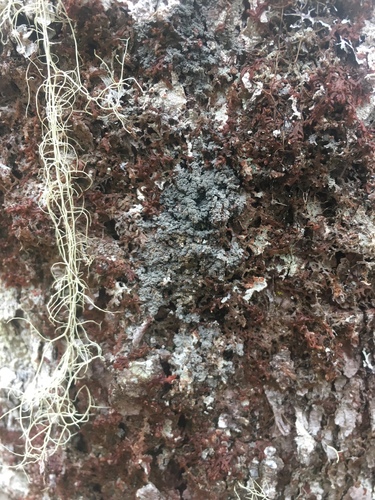
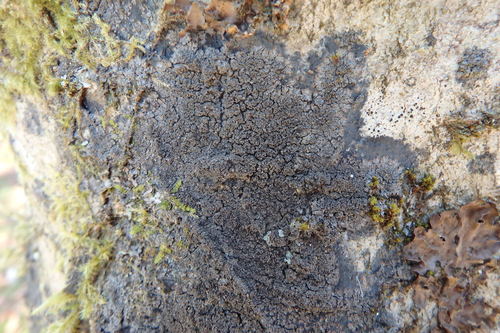
Parmeliella testacea is a foliose lichen species characterized by its brownish to olive-green thallus with distinctive lobed margins and a somewhat leathery texture. This cyanolichen forms symbiotic relationships with cyanobacteria, enabling it to fix atmospheric nitrogen and contribute to nutrient cycling in its ecosystem while providing habitat microstructures for small invertebrates.

01Classification

Taxonomy & Classification

Kingdom

Fungi

Phylum

Ascomycota

Class

Lecanoromycetes

Order

Peltigerales

Family

Pannariaceae

Genus

Parmeliella

kornfiltlav belongs to the family Pannariaceae, order Peltigerales, within the Lecanoromycetes class.

02Description

Species Profile

Parmeliella testacea is a foliose lichen species characterized by its brownish to olive-green thallus with distinctive lobed margins and a somewhat leathery texture. This cyanolichen forms symbiotic relationships with cyanobacteria, enabling it to fix atmospheric nitrogen and contribute to nutrient cycling in its ecosystem while providing habitat microstructures for small invertebrates.

Parmeliella testacea faces severe decline primarily due to air pollution and habitat degradation affecting the specific microenvironments required for lichen survival. The species is particularly vulnerable to nitrogen deposition and sulfur dioxide emissions which alter bark chemistry and disrupt the delicate symbiotic relationship between fungal and algal components.

Key Facts

IUCN StatusEndangered (EN)
GroupFungi
03Habitat

Habitat & Distribution

This lichen typically grows on the bark of deciduous trees in humid, old-growth forests and well-established woodlands with stable microclimatic conditions. It shows preference for trees with rough bark in areas with consistent moisture levels and minimal air pollution.

TERRESTRIALMajor
04Threats

Threats

!

IUCN Red List: Endangered

Parmeliella testacea faces severe decline primarily due to air pollution and habitat degradation affecting the specific microenvironments required for lichen survival. The species is particularly vulnerable to nitrogen deposition and sulfur dioxide emissions which alter bark chemistry and disrupt the delicate symbiotic relationship between fungal and algal components.

Air pollution and acid deposition

HighOngoing

Habitat loss and forest fragmentation

HighOngoing

Changes in forest management practices

MediumOngoing

Climate change affecting moisture regimes

MediumOngoing
Community

Community Sightings

Report a sighting

No community sightings yet. Be the first to report!

07Sources

Sources & Attribution

How to Cite

IUCN: IUCN (2025). The IUCN Red List of Threatened Species. Version 2025-1. Available at: https://www.iucnredlist.org. doi:10.2305/IUCN.UK.2025-1.RLTS

GBIF: GBIF.org (2025). GBIF Home Page. Available at: https://www.gbif.org

This page: SpeciesRadar (2025). kornfiltlav (Parmeliella testacea). SpeciesRadar: Intelligence for Earth's Biodiversity. Available at: https://speciesradar.org/species/kornfiltlav

Full citation guide & data usage terms