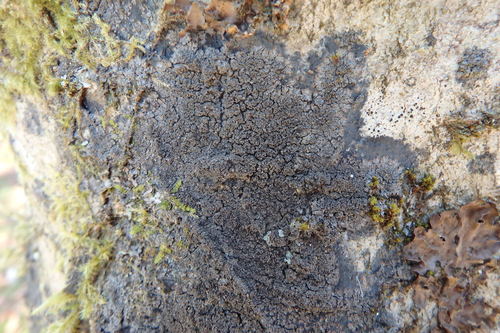
Black-bordered Shingle Lichen
Parmeliella thriptophylla
Photo: iNaturalist: (c) Kitty LaBounty (deceased), some rights reserved (CC BY-NC), uploaded by Kitty LaBounty (deceased)
Overview
The Black-bordered Shingle Lichen (Parmeliella thriptophylla) is a distinctive foliose lichen characterized by its overlapping, shingle-like lobes with dark borders that create a striking contrast against its lighter central portions. This species forms small to medium-sized rosettes on tree bark and rock surfaces, playing a crucial ecological role as a pioneer species in forest succession and providing microhabitat for invertebrates.
The Black-bordered Shingle Lichen is critically endangered primarily due to habitat loss and degradation from air pollution, particularly nitrogen deposition and sulfur dioxide emissions. This epiphytic lichen requires very specific environmental conditions on old-growth trees, making it extremely vulnerable to changes in air quality and forest management practices.
Habitat
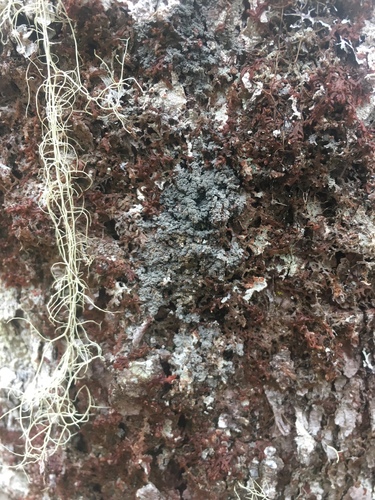
Parmeliella thriptophylla grows exclusively on the bark of mature deciduous trees in humid, old-growth forests with consistent moisture levels and minimal air pollution. It typically colonizes the north-facing sides of oak, maple, and beech trees in sheltered valleys and ravines where fog and mist provide optimal humidity conditions.
Other threatened species in Pannariaceae

Frequently asked questions
Why is Black-bordered Shingle Lichen classified as Critically Endangered?
Where does Black-bordered Shingle Lichen live?
What are the main threats to Black-bordered Shingle Lichen?
Get weekly conservation intelligence
One short digest a week of the most striking species and country data we ship, plus breaking conservation news paired with our database where it matters.
Free, no spam. One-click unsubscribe in every email.