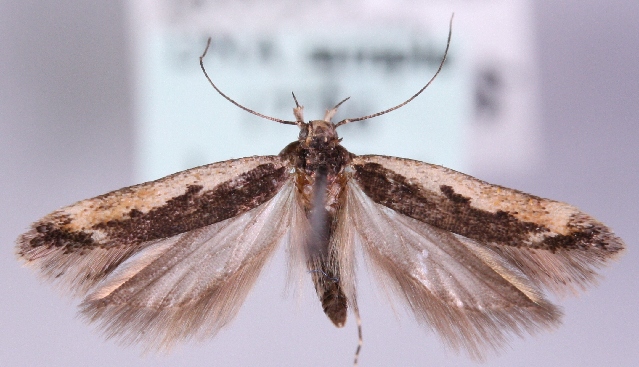
Cosmardia moritzella
Photo: Wikimedia Commons (CC) via https://en.wikipedia.org/wiki/Cosmardia_moritzella
Overview
Cosmardia moritzella is a moth of the family Gelechiidae. It is found in Portugal, France, Germany, Austria, Switzerland, Italy, Poland, the Czech Republic, Slovakia, Belarus, Hungary, Romania, Greece, Estonia, Latvia, Lithuania, Finland, Norway, Ukraine and Russia.
Cosmardia moritzella, the Koekoeksbloempalpmot, is critically endangered primarily due to habitat loss and degradation of its specialized host plant environments. The species has an extremely limited distribution and appears to be dependent on specific ecological conditions that are increasingly threatened by human activities and environmental changes.
Habitat
Cosmardia moritzella is associated with a narrow and poorly documented habitat range, likely linked to specific host plant or microhabitat conditions typical of small Elachistidae moths.
Other threatened species in Gelechiidae


Threatened in Åland Islands


Frequently asked questions
Why is Cosmardia moritzella classified as Critically Endangered?
Where does Cosmardia moritzella live?
What are the main threats to Cosmardia moritzella?
Get weekly conservation intelligence
One short digest a week of the most striking species and country data we ship, plus breaking conservation news paired with our database where it matters.
Free, no spam. One-click unsubscribe in every email.