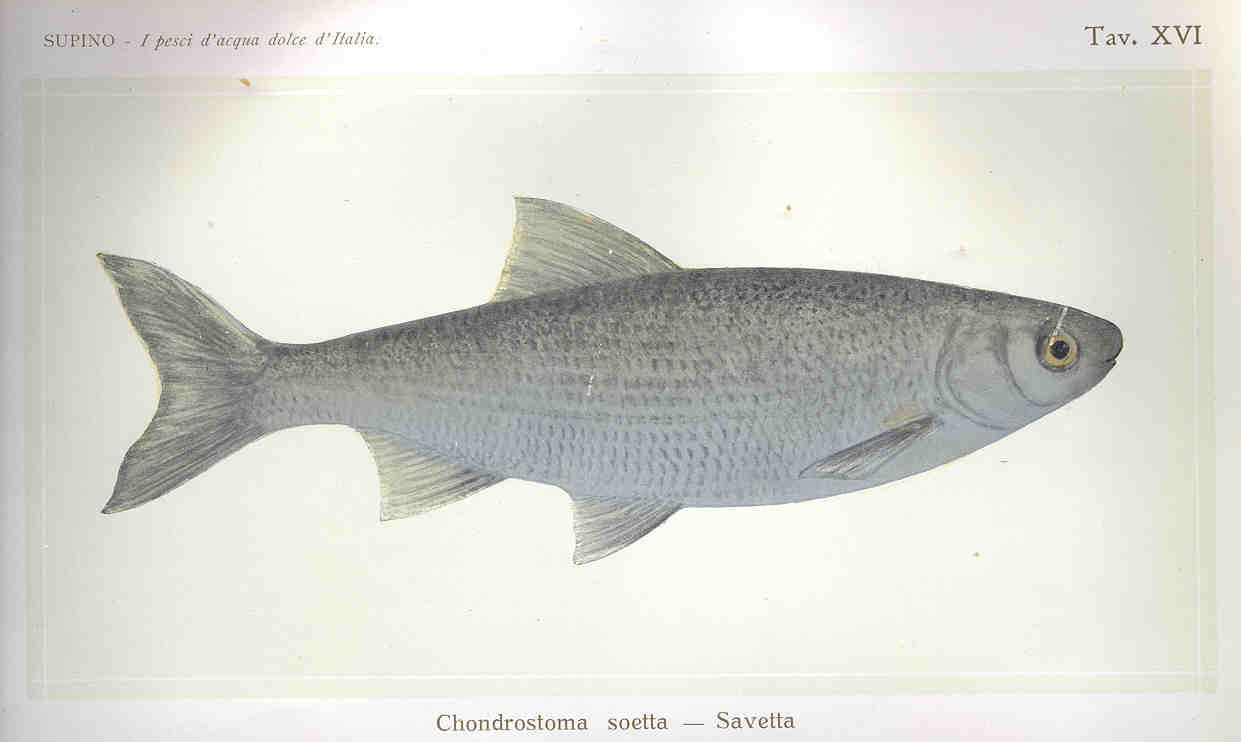
Italian Nase
Chondrostoma soetta
Photo: Wikimedia Commons (CC) via https://en.wikipedia.org/wiki/Chondrostoma_soetta
Overview
Chondrostoma soetta, or the Italian nase, is a species of freshwater ray-finned fish belonging to the family Leuciscidae. It is found in Italy, Slovenia and Switzerland. Its natural habitats are rivers and freshwater lakes.
It is threatened by habitat loss and predation and competition from introduced species such as roach, wels catfish and the common nase. It has been extirpated from Slovenia and numbers are declining in the Italian and Swiss lakes of Lake Como, Lake Lugano, Lake Maggiore, Lake Iseo and Lake Garda. Some population which are descended from fish introduced to other lakes in Italy appear to be thriving.
Chondrostoma soetta faces severe population decline primarily due to water abstraction and dam construction that fragments its riverine habitat and alters natural flow regimes. Pollution from agricultural runoff and urban development has degraded water quality in its native Italian river systems. Introduced non-native fish species compete for resources and may hybridize with remaining populations, further threatening genetic integrity.
Habitat
This endemic Italian cyprinid inhabits clear, fast-flowing rivers and streams with rocky or gravelly substrates in the Po River basin. It prefers well-oxygenated waters with moderate to strong currents and typically occurs in mid-elevation river reaches.
Conservation measures underway
Other threatened species in LEUCISCIDAE
Threatened in Italy
Frequently asked questions
Why is Italian Nase classified as Critically Endangered?
Where does Italian Nase live?
What are the main threats to Italian Nase?
Get weekly conservation intelligence
One short digest a week of the most striking species and country data we ship, plus breaking conservation news paired with our database where it matters.
Free, no spam. One-click unsubscribe in every email.