Hypselotriton chenggongensis
Overview
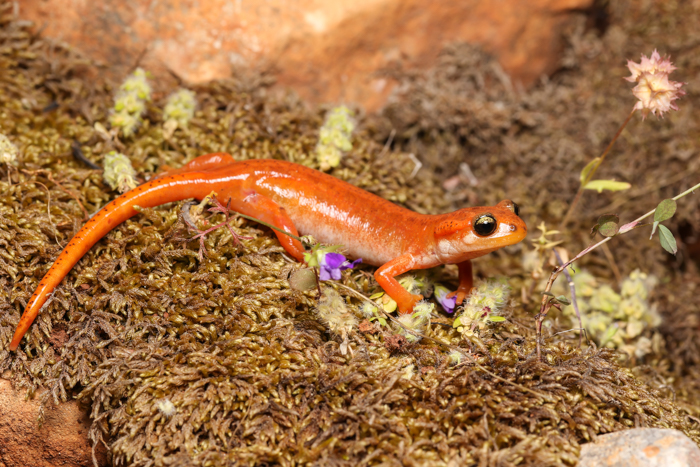
Hypselotriton chenggongensis, commonly known as the Chenggong newt, is a small, elusive salamander endemic to a highly restricted area near Chenggong District in Yunnan Province, China. Like other members of its genus, it typically displays a slender body with smooth, glandular skin, a coloration ranging from olive-brown to darker tones dorsally, and a paler, often orange-tinged underside used in warning displays against predators. This species is classified as Critically Endangered (CR) by the IUCN, reflecting its extremely limited range and ongoing population decline.
It inhabits shallow ponds, slow-moving streams, and adjacent moist terrestrial habitat in subtropical montane areas, relying on both aquatic breeding sites and nearby vegetation cover for foraging and shelter. Its restricted distribution makes it exceptionally vulnerable to localized environmental disturbance, and the population trend is currently decreasing according to available assessments. Major pressures stem from rapid urban and agricultural expansion around Chenggong, which has drained, polluted, or fragmented the wetland habitats this newt depends on for reproduction.
Collection for the pet trade and scientific study has also been documented as a compounding stressor for small-range Asian newt species. Conservation attention for Hypselotriton chenggongensis remains limited, though its inclusion in IUCN assessments has helped raise awareness of the broader crisis facing narrow-endemic Yunnan amphibians, prompting calls for habitat protection and wetland restoration in the region. Encouragingly, increased herpetological survey efforts in Yunnan over the past decade have improved documentation of remaining populations, providing a stronger baseline for future targeted conservation action such as site protection and captive-breeding feasibility studies.
Hypselotriton chenggongensis faces severe population decline primarily due to rapid urbanization and agricultural expansion around Kunming, which has destroyed much of its limited montane habitat. Water pollution from agricultural runoff and urban development has degraded the quality of breeding ponds and streams essential for reproduction. The species' extremely restricted range makes it particularly vulnerable to local environmental changes and habitat fragmentation.
Habitat
This newt inhabits montane forests and associated freshwater habitats at elevations around 2000 meters in the Yunnan Province of China. It requires clean streams, ponds, and temporary water bodies within forested areas for breeding and larval development.
Conservation measures underway
Other threatened species in SALAMANDRIDAE
Threatened in China
Frequently asked questions
Why is Hypselotriton chenggongensis classified as Critically Endangered?
Where does Hypselotriton chenggongensis live?
What are the main threats to Hypselotriton chenggongensis?
Get weekly conservation intelligence
One short digest a week of the most striking species and country data we ship, plus breaking conservation news paired with our database where it matters.
Free, no spam. One-click unsubscribe in every email.