Holothuria fuscogilva
Overview
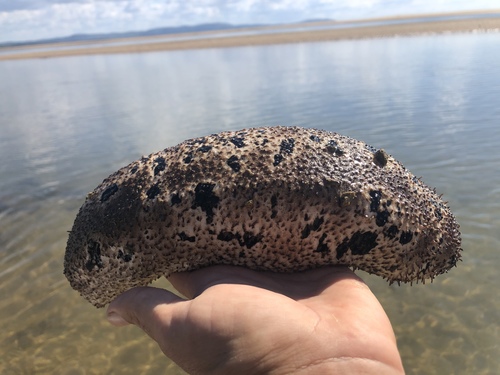
Holothuria fuscogilva, known as the white teatfish, is a large sea cucumber belonging to the family Holothuriidae. It has a thick, firm body wall, typically pale grey to white on the dorsal surface with darker mottling, and can reach substantial size compared to related species. As a deposit feeder, it moves slowly across the seafloor ingesting sediment and organic detritus, playing an important role in nutrient cycling and the aeration of substrate within reef ecosystems.
Like other holothurians, it has few natural predators as an adult but is vulnerable during early life stages.
The species inhabits shallow marine neritic waters, particularly sandy and rubble areas associated with coral reefs and lagoons. Its range spans the Indo-Pacific region, with recorded populations in Australia, Japan, China, India, Egypt, and South Africa, reflecting a broad but patchy distribution tied to suitable reef habitat.
Holothuria fuscogilva is heavily targeted in the commercial trade for dried sea cucumber (bêche-de-mer), particularly valued in Asian markets, leading to significant population declines in many areas through overharvesting. Additional pressures include coral reef degradation, coastal development, sedimentation, pollution, and the broader effects of climate change on reef habitats, all of which reduce the quality and extent of suitable habitat.
Conservation measures include harvest regulations, size limits, seasonal closures, and trade monitoring under international frameworks, alongside marine protected areas established in parts of its range. Some countries have implemented moratoria or quotas specifically targeting sea cucumber fisheries.
Despite these measures, enforcement remains inconsistent across its range, and illegal and unregulated harvesting continues in many areas. The population trend is currently decreasing, and without stronger enforcement and sustained international cooperation, continued decline is likely.
This large sea cucumber is being heavily overharvested to supply the international sea cucumber food trade, while the coral reefs it depends on are being damaged by coastal construction, runoff, and pollution that muddy and dirty the water. Rising ocean temperatures and other climate-related changes are further stressing the reef habitats it relies on. Overall, these threats appear to be ongoing and intensifying rather than easing.
Habitat
Holothuria fuscogilva inhabits shallow tropical coral reefs and sandy lagoons throughout the Indo-Pacific region, typically found at depths of 1-20 meters. The species prefers areas with mixed coral and sand substrates, often sheltering under coral overhangs or in crevices during daylight hours.
Conservation measures underway
Other threatened species in HOLOTHURIIDAE
Threatened in Australia
Frequently asked questions
Why is Holothuria fuscogilva classified as Endangered?
Where does Holothuria fuscogilva live?
What are the main threats to Holothuria fuscogilva?
Get weekly conservation intelligence
One short digest a week of the most striking species and country data we ship, plus breaking conservation news paired with our database where it matters.
Free, no spam. One-click unsubscribe in every email.