Himalayan Trillium
Trillium govanianum
Overview
Nagchhatri
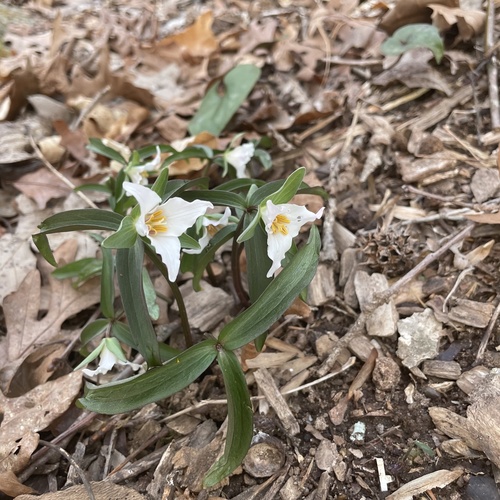
Trillium govanianum, commonly known as nagchhatri or three-leaved Paris, is a distinctive perennial herb belonging to the lily family. The plant features a single stem reaching 30-60 cm in height, topped by a whorl of 4-8 broad, ovate leaves arranged in a symmetrical pattern. Its solitary flower displays prominent yellow-green sepals and smaller petals, blooming from May to July.
The species plays an important ecological role as an understory plant in forest ecosystems and serves as a pollinator resource during its flowering period.
This Himalayan endemic occurs across Afghanistan, Pakistan, northern India, Nepal, Bhutan, and southwestern China, typically at elevations between 2,400-4,300 meters. The species inhabits temperate and subalpine coniferous forests, thriving in moist, humus-rich soils under dense canopy cover.
Trillium govanianum faces significant pressure from overharvesting for traditional medicine, where its rhizomes are valued for various therapeutic properties. Livestock grazing degrades its forest habitat by trampling plants and altering soil conditions. Climate change poses an additional threat through shifting temperature and precipitation patterns that affect its high-altitude habitat requirements.
Conservation efforts include cultivation programs in botanical gardens and research institutions to reduce wild collection pressure. Some regions have implemented harvesting regulations, though enforcement remains challenging across its extensive range.
The species' outlook remains concerning due to continued habitat degradation and persistent harvesting pressure. Without strengthened protection measures and sustainable harvesting practices, population declines are likely to continue across much of its range.
Trillium govanianum, a medicinal plant found in the Himalayas, faces three main threats that are all currently happening. Livestock grazing and farming activities are damaging the areas where the plant grows, while climate change is shifting and altering its mountain habitat. Additionally, the plant is being overharvested for its valuable medicinal properties, particularly its roots which are collected for traditional medicine and commercial trade. All of these threats are ongoing and appear to be continuing at current levels.
Habitat
Conservation measures underway
Other threatened species in MELANTHIACEAE
Threatened in Afghanistan

Frequently asked questions
Why is Himalayan Trillium classified as Endangered?
Where does Himalayan Trillium live?
What are the main threats to Himalayan Trillium?
Get weekly conservation intelligence
One short digest a week of the most striking species and country data we ship, plus breaking conservation news paired with our database where it matters.
Free, no spam. One-click unsubscribe in every email.