Snaggletooth Shark
Hemipristis elongata
Overview
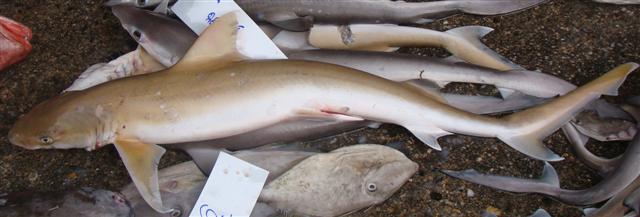
Named for its prominent, jagged dentition, this large shark reaches lengths of up to 2.4 meters and is distinguished by its slender, streamlined body, brownish coloration, and long, hook-shaped teeth adapted for gripping slippery prey such as fish, cephalopods, and other sharks and rays. As a mid- to upper-level predator, it plays an important role in structuring prey populations within the coastal and continental shelf ecosystems it inhabits. It is a fast-swimming, active hunter, typically found close to the seabed but capable of moving through the water column in pursuit of prey.
This species occupies rocky reefs and marine neritic and coastal waters, generally at depths shallow enough to keep it within reach of coastal fisheries. Its range spans the Indo-West Pacific and parts of the western Indian Ocean, with confirmed occurrence in countries including Papua New Guinea, South Africa, Australia, and China.
The primary threat to this shark is ongoing exploitation through fishing and harvesting of aquatic resources. It is caught both as a targeted species and as bycatch in commercial and artisanal fisheries operating across its coastal range, with its meat, fins, and other body parts entering trade. Its habitat preference for accessible coastal and shelf waters increases its exposure to sustained fishing pressure.
Conservation measures are limited in scope, with protections varying considerably by country and enforcement often inconsistent. Some regional fisheries management and shark-specific trade regulations apply in parts of its range, though comprehensive range-wide protections are lacking.
Given continued fishing pressure and insufficient regulatory coverage across much of its range, the population is assessed as decreasing, and the species is currently classified as Endangered, with its long-term outlook dependent on stronger enforcement and catch limitations.
The Snaggletooth Shark is primarily threatened by ongoing commercial and small-scale fishing, where it is caught both intentionally for its meat and fins and unintentionally as bycatch in nets and on lines meant for other species. Because this fishing pressure continues across its coastal habitat without signs of letting up, the threat to this species remains ongoing and shows no indication of decreasing.
Habitat
Conservation measures underway
Other threatened species in HEMIGALEIDAE


Threatened in Australia
Frequently asked questions
Why is Snaggletooth Shark classified as Endangered?
Where does Snaggletooth Shark live?
What are the main threats to Snaggletooth Shark?
Get weekly conservation intelligence
One short digest a week of the most striking species and country data we ship, plus breaking conservation news paired with our database where it matters.
Free, no spam. One-click unsubscribe in every email.